Backed by Hampstead Renovations|Sister Company: Hampstead Chartered Surveyors (RICS Regulated)
Belgravia Painters& Decorators

SW1X · SW1W

Heritage & Period Painting in Belgravia

Professional heritage & period painting in Belgravia. Local specialists who understand the unique character and requirements of properties in this area.

About Belgravia

Belgravia presents a painting and decorating challenge unlike any other London neighbourhood. The sweeping cream stucco crescents designed by Thomas Cubitt in the 1820s create a uniform streetscape that demands absolute precision in colour matching and finish consistency. Belgrave Square, with its four palatial terraces, sets the standard — each elevation must be maintained to exacting specifications overseen by the Grosvenor Estate's property management team. Eaton Square, the longest garden square in London, features nearly 200 individual properties whose stucco facades are repainted on a rolling programme, and our team has been part of this cycle for years. Working along Elizabeth Street and Motcomb Street, the character shifts to a more village-like scale with independent shops and mews conversions, but the standards remain equally high. Chester Square and Eccleston Square introduce subtle variations in architectural detail — different cornicing profiles, varied fanlight designs — that require careful observation during restoration work. Interior projects in Belgravia frequently involve period-appropriate techniques: dead-flat oil finishes on panelling, specialist glazing on walls, and the careful cutting-in around elaborate ceiling roses and plasterwork that defines these Grade I and Grade II listed interiors. Our deep familiarity with the estate's requirements and the area's specific architectural language makes us particularly effective here.

Our Heritage Approach

Heritage painting demands a fundamentally different mindset from standard decoration. Modern paints, while convenient, can cause irreversible damage to historic substrates by trapping moisture within lime plaster and soft masonry. We always begin by identifying the original materials and understanding how the building was designed to manage moisture. Lime plaster walls receive breathable lime wash or mineral paint rather than vinyl emulsions that create a vapour barrier. Original timber joinery is treated with linseed oil systems that penetrate the wood and allow it to breathe, rather than film-forming acrylics that can blister and trap rot beneath the surface. Where previous unsympathetic decoration has been applied, we can carefully remove modern coatings to reveal and restore the original finishes beneath. Our preparation techniques are deliberately gentle: we avoid power tools on delicate mouldings, hand-scrape rather than heat-strip original lead paint, and use consolidants rather than fillers wherever possible to preserve as much historic fabric as we can. Beyond standard decoration, our local expertise in Belgravia includes comprehensive paint archaeology, specialist heritage colour schemes, and full-service listed building painter London. We are recognized throughout the Westminster area for our meticulous approach to heritage painting London, ensuring every project meets the uncompromising standards expected by our clients.

Heritage & Period Painting in Belgravia

Belgravia's Thomas Cubitt terraces represent one of the most cohesive examples of Regency-era town planning in existence, and heritage painting within these Grade II and Grade II* listed properties demands both technical precision and historical sensitivity. Our work across Eaton Square, Belgrave Square, and Chester Square involves restoring original decorative schemes where evidence survives — often discovered beneath layers of later emulsion during careful paint scraping and analysis. We employ paint archaeologists when clients wish to recreate historically authentic colour schemes, sending samples for microscopic cross-section analysis that reveals every layer of decoration applied since the 1820s. The formal reception rooms of Belgravia's principal terraces frequently feature hand-painted ceiling borders, gilded moulding highlights, and marbled pilaster treatments that our specialist decorative painters can restore or recreate using traditional techniques including oil gilding, trompe l'oeil brushwork, and stippled glazing over ground coats. Communal entrance halls in the Belgrave Square mansion conversions retain original stone-flagged floors, cantilevered stone staircases, and plaster ceiling medallions that we paint using reversible lime-based systems approved by the Grosvenor Estate's conservation advisor.

Properties in Belgravia

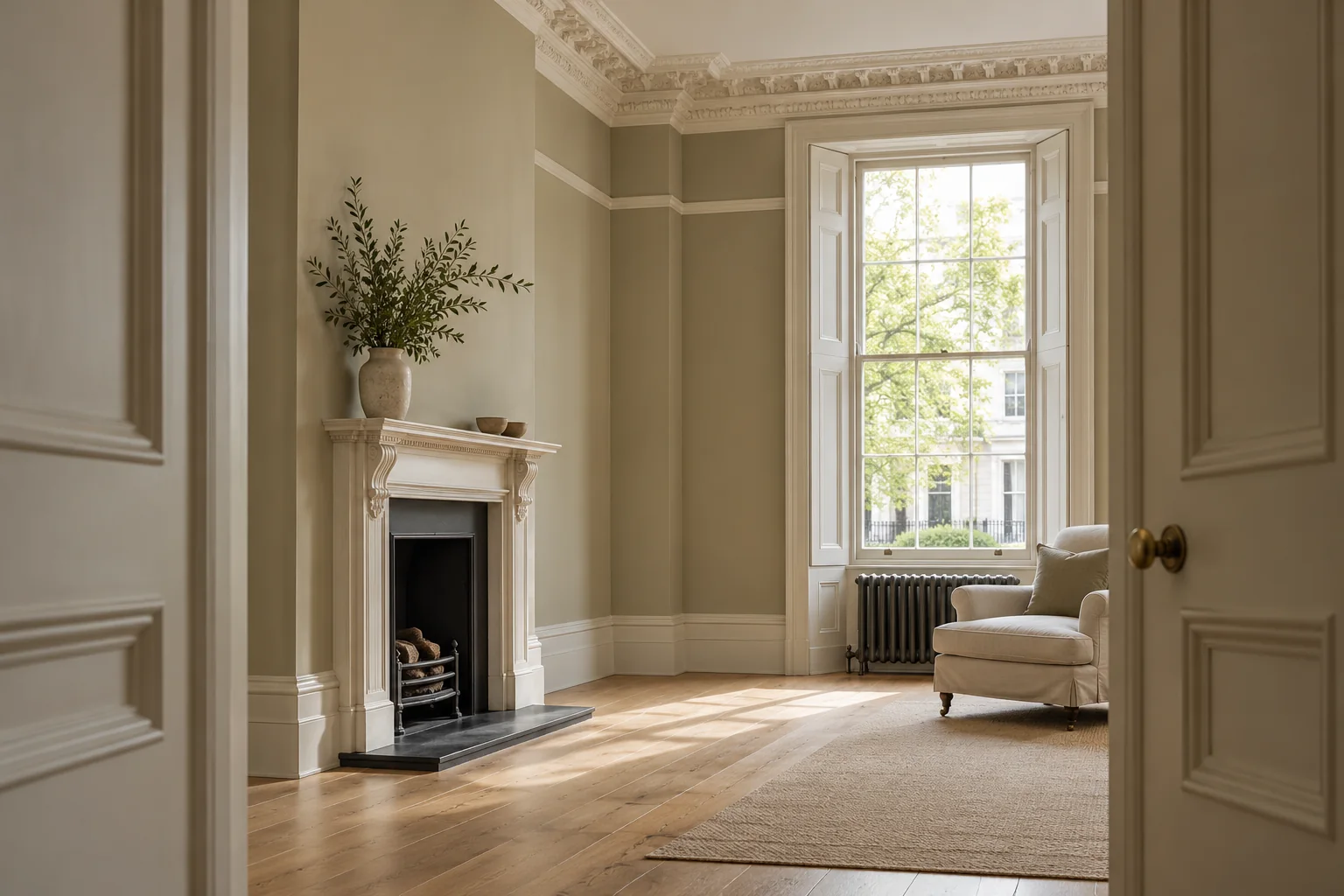
The dominant property type in Belgravia is the white stucco-fronted townhouse, typically spanning four to six storeys with a lower ground floor and often a mews house to the rear. These properties feature grand double-height reception rooms on the first floor, with ornate plasterwork, marble fireplaces, and original timber shutters. Many have been divided into lateral flats, particularly along Eaton Place and Chesham Place, creating large apartments with period features but modern services. The mews streets — Eaton Mews North, Belgrave Mews West, Kinnerton Street — contain former carriage houses converted into compact but highly desirable homes, often with garages at ground level and living space above. Cadogan Estate properties south of Pont Street blend into Chelsea, with red-brick Queen Anne Revival buildings requiring different preparation and paint systems than the stucco to the north. Modern insertions are rare but include several contemporary penthouse additions that sit behind retained period facades.

Heritage & Conservation

Belgravia is covered by the Belgravia Conservation Area, with additional protections under the Grosvenor Estate's lease covenants and the Cadogan Estate's management protocols. The stucco colour across Grosvenor Estate properties is specified precisely — traditionally a warm off-white using Dulux or Sandtex masonry paint in an estate-approved shade — and deviation is not permitted. Listed building consent applies to a significant majority of properties and covers internal as well as external works. Removing or altering original features such as cornicing, dado rails, or chimney pieces without consent is a criminal offence. The Grosvenor Estate requires that any proposed works be submitted for approval prior to commencement, with detailed specifications of materials and colours. Scaffolding on stucco facades must be erected using standoff brackets to prevent surface damage, and we use felt-padded fittings as standard. The Cadogan Estate operates a similar but distinct approval process for properties in the southern portion of Belgravia.

What We Deliver

  • Paint analysis and historical colour research for authentic period schemes
  • Application of lime wash, distemper, and casein paints on appropriate substrates
  • Linseed oil paint systems for original timber windows, doors, and shutters
  • Breathable mineral paint systems for listed building exteriors
  • Restoration of decorative plasterwork including cornicing and ceiling roses
  • Gilding and specialist finishes on architectural ornament
  • Careful preparation of original lime plaster without damaging historic fabric
  • Liaison with conservation officers and heritage consultants
  • Detailed photographic records of work for planning compliance

FAQs About Heritage & Period Painting in Belgravia

We provide breathable lime-paint application on period stucco, distemper and casein-based finishes for original plaster interiors, lead paint encapsulation, period colour restoration and ornate plasterwork painting in Belgravia's grand early-Victorian houses.

We begin with a detailed condition survey and any required Listed Building Consent applications. Conservation-grade materials are specified, original features are carefully protected, and all work is documented with photographs for the building's historic record.

We carry out paint scrape analysis to identify original pigments across successive layers. Working with heritage colour consultants, we recreate the authentic palette using historically accurate paints that comply with conservation standards.

Belgravia's conservation area status means all exterior works must maintain the established character. We use breathable masonry paints on stucco, traditional linseed-oil paints on timber and heritage-appropriate colours approved by the estate and planning authority.

A heritage interior scheme in a five-storey Belgravia house typically runs six to twelve weeks. The pace reflects the meticulous preparation, multiple thin coats and drying times that traditional materials require.

Ready for Expert Heritage in Belgravia?

Get a free, no-obligation quote for your heritage & period painting project in Belgravia. We respond within 24 hours.