Backed by Hampstead Renovations|Sister Company: Hampstead Chartered Surveyors (RICS Regulated)
Belgravia Painters& Decorators

SW3 · SW10

Heritage & Period Painting in Chelsea

Professional heritage & period painting in Chelsea. Local specialists who understand the unique character and requirements of properties in this area.

About Chelsea

Chelsea has a distinctive character that sets its painting and decorating requirements apart from its neighbours. The area's artistic heritage — from the Pre-Raphaelites who gathered on Cheyne Walk to the Chelsea Arts Club on Old Church Street — means that residents here often have strong opinions about colour, finish, and aesthetic direction. Our work along the King's Road corridor ranges from the elegant Georgian terraces of Royal Avenue and St Leonard's Terrace, where restrained heritage palettes predominate, to the more bohemian conversions of World's End where clients embrace bolder choices. The Cadogan Estate manages a substantial portfolio stretching from Sloane Square down to the Embankment, and their property team requires advance approval for all exterior works and many interior alterations. Cheyne Walk presents a particular challenge: the riverside terraces are Grade I and II listed, with elaborate early Georgian interiors including carved wooden overmantels, fielded panelling, and plaster ceilings that demand the most careful preparation and application. Moving west into SW10, the Victorian terraces of Redcliffe Square and The Boltons transition to a different architectural character — Italianate stucco villas with deep cornices and portico entrances. Chelsea's creative community expects decorators who can discuss colour theory, understand the impact of Thames-reflected light on south-facing rooms, and execute both traditional and contemporary finishes to gallery standard.

Our Heritage Approach

Heritage painting demands a fundamentally different mindset from standard decoration. Modern paints, while convenient, can cause irreversible damage to historic substrates by trapping moisture within lime plaster and soft masonry. We always begin by identifying the original materials and understanding how the building was designed to manage moisture. Lime plaster walls receive breathable lime wash or mineral paint rather than vinyl emulsions that create a vapour barrier. Original timber joinery is treated with linseed oil systems that penetrate the wood and allow it to breathe, rather than film-forming acrylics that can blister and trap rot beneath the surface. Where previous unsympathetic decoration has been applied, we can carefully remove modern coatings to reveal and restore the original finishes beneath. Our preparation techniques are deliberately gentle: we avoid power tools on delicate mouldings, hand-scrape rather than heat-strip original lead paint, and use consolidants rather than fillers wherever possible to preserve as much historic fabric as we can. Beyond standard decoration, our local expertise in Chelsea includes comprehensive breathable paint systems, specialist historic building decoration, and full-service paint archaeology. We are recognized throughout the Kensington & Chelsea area for our meticulous approach to heritage painting London, ensuring every project meets the uncompromising standards expected by our clients.

Heritage & Period Painting in Chelsea

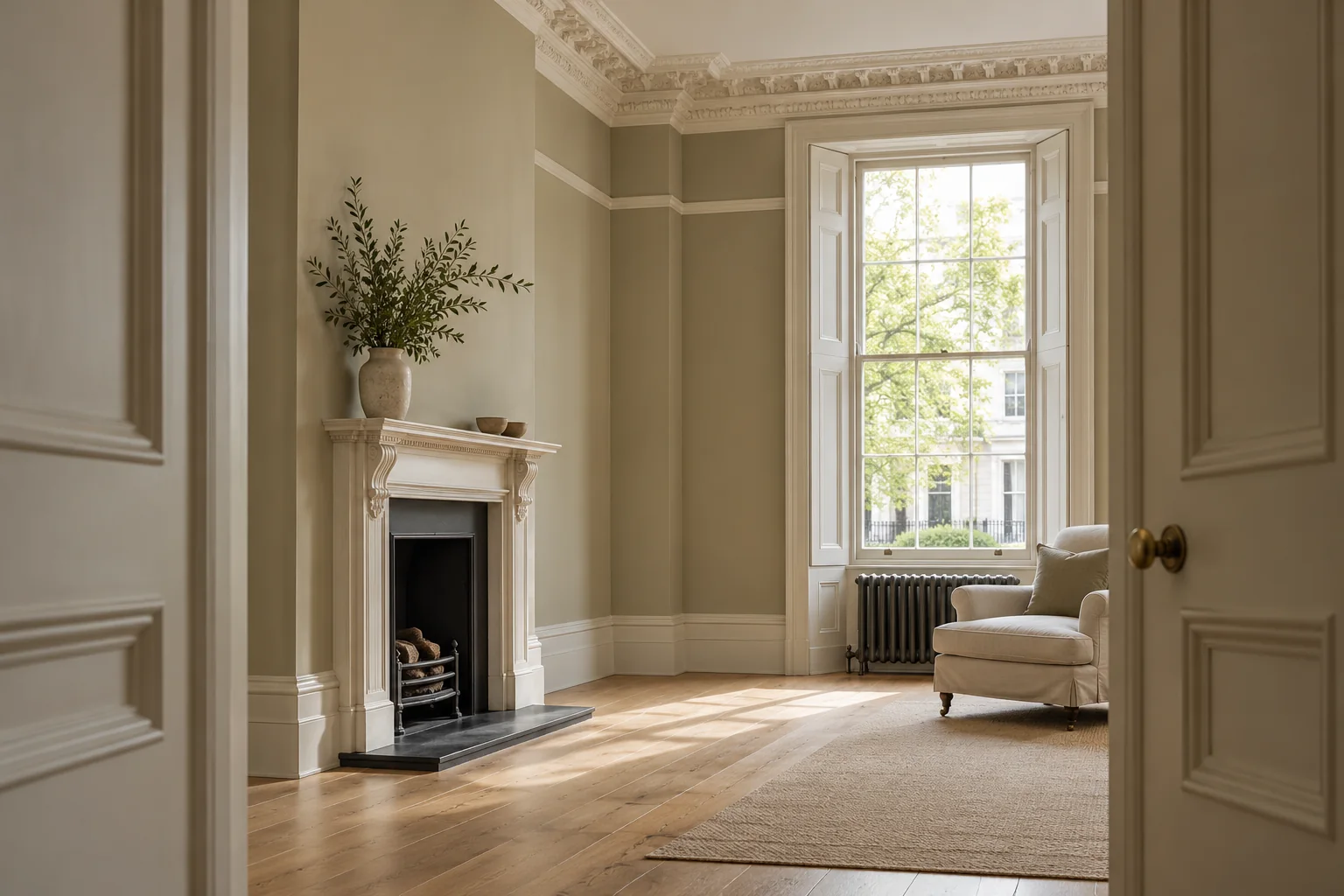
Chelsea's heritage painting requirements reflect the borough's rich artistic and architectural history, from the Pre-Raphaelite associations of Cheyne Walk to the Arts and Crafts detailing found in properties along The Vale and Glebe Place. Our heritage painters have particular expertise with the late-Georgian and early-Victorian terraced houses that predominate in Chelsea, where original features including six-panel doors, turned staircase balusters, fluted door architraves, and shallow-arched fanlights above front entrances all warrant the careful preparation and period-appropriate finishes that distinguish genuine heritage decorating from a simple repaint. The Cadogan Estate's heritage properties — notably the mid-Victorian terraces designed by architect George Godwin — feature distinctive polychromatic brickwork with painted stone dressings that require specialist knowledge to maintain correctly. Inside, many Chelsea houses retain original built-in dressers, window seats, and alcove cupboards that our decorators paint using traditional linseed oil eggshell or modern heritage-equivalent finishes depending on the level of authenticity the client requires. We are experienced in liaising with the Royal Borough of Kensington and Chelsea's conservation team for listed building consent applications, providing the detailed method statements, material specifications, and photographic records that support a successful application.

Properties in Chelsea

Chelsea's property landscape spans three centuries of London architecture. The oldest surviving houses along Cheyne Walk and Cheyne Row date from the early 18th century and feature intimate room proportions, original pine panelling, and irregular floor levels that complicate modern decorating. The grand Cadogan Estate terraces of Cadogan Square and Cadogan Place are substantial Victorian properties, typically five storeys with servants' quarters, featuring elaborate plasterwork, marble halls, and ornamental ironwork. Mansion flats in blocks such as Oakley Gardens and Chelsea Manor Street offer generously sized apartments with period features and communal gardens. The mews houses behind Cadogan Square and along Pavilion Road provide compact, high-value properties where every surface matters. In SW10, the substantial detached and semi-detached houses of The Boltons and Tregunter Road are among the largest single residential properties in the borough, with gardens and coach houses that extend the scope of exterior decorating considerably.

Heritage & Conservation

Chelsea falls within the Chelsea Conservation Area, with additional Article 4 directions restricting permitted development rights across much of the area. The Royal Borough of Kensington and Chelsea operates particularly rigorous planning enforcement, and unapproved exterior alterations — including changes to front door colours or window frame finishes — can result in enforcement notices. The Cadogan Estate's lease covenants impose requirements beyond planning law, specifying approved contractors for certain works and mandating estate inspection upon completion. Listed building consent is required for the many Grade I and Grade II buildings, with Cheyne Walk properties subject to especially stringent controls given their national significance. The Sloane Stanley Estate manages properties in the Fulham Road area and operates its own approval process. Conservation officers at RBKC are knowledgeable and generally supportive of appropriate restoration work, but expect detailed applications with paint analysis reports for significant listed buildings.

What We Deliver

  • Paint analysis and historical colour research for authentic period schemes
  • Application of lime wash, distemper, and casein paints on appropriate substrates
  • Linseed oil paint systems for original timber windows, doors, and shutters
  • Breathable mineral paint systems for listed building exteriors
  • Restoration of decorative plasterwork including cornicing and ceiling roses
  • Gilding and specialist finishes on architectural ornament
  • Careful preparation of original lime plaster without damaging historic fabric
  • Liaison with conservation officers and heritage consultants
  • Detailed photographic records of work for planning compliance

FAQs About Heritage & Period Painting in Chelsea

Chelsea's listed houses require breathable lime-based paints on original plaster, careful treatment of panelled shutters and doors, and restoration of decorative plasterwork using period techniques. We match all materials to the building's age and construction.

We strip built-up paint from shutters and panelling, repair any timber damage, and refinish with a traditional linseed-oil paint or breathable eggshell. The result reveals the original profiles that years of overpainting may have obscured.

RBKC provides guidance on appropriate exterior colours for Chelsea conservation areas. Interior colours are not regulated, but we advise on period-appropriate palettes that complement the architecture and satisfy any heritage sensibilities.

Fireplaces, cornicing, ceiling roses and original floor tiles are masked with acid-free materials and protective padding. We use hand tools rather than power tools near delicate plasterwork and take a slow, careful approach throughout.

A three-storey Chelsea listed house takes six to ten weeks for a full heritage interior scheme. Individual rooms with significant restoration requirements — such as a panelled drawing room — may take two weeks on their own.

Ready for Expert Heritage in Chelsea?

Get a free, no-obligation quote for your heritage & period painting project in Chelsea. We respond within 24 hours.