
Your local decorating brief
Sash window painting in South Kensington
A South Kensington sash-window brief covering historic glazing patterns, repairs, internal and external faces, RBKC checks and upper-floor access.
A useful sash-window enquiry begins with a numbered window list, not simply a count. Show each opening from inside and outside where safely possible. Record its position, the faces to be decorated and any sticking, loose putty or visible timber damage. Separate redecoration from proposed repairs to the window itself.
Recognise the window before specifying the work
RBKC’s Thurloe Estate and Smith’s Charity appraisal identifies painted timber sliding sashes as the characteristic window type. Earlier small-paned examples and larger-paned Victorian sashes have different details. It also lists crown and cylinder glass among the traditional materials. The decorating brief should preserve that distinction rather than treating each opening as interchangeable.
Use close photographs to identify glazing bars, meeting rails, surrounds and retained fittings. Ask for loose coatings and repair needs to be assessed individually. Record whether reveals and shutters belong to the same appointment, and distinguish the inside finish from any building-wide exterior colour requirement supplied by the owner.
References: Thurloe Estate and Smith’s Charity Conservation Area Appraisal
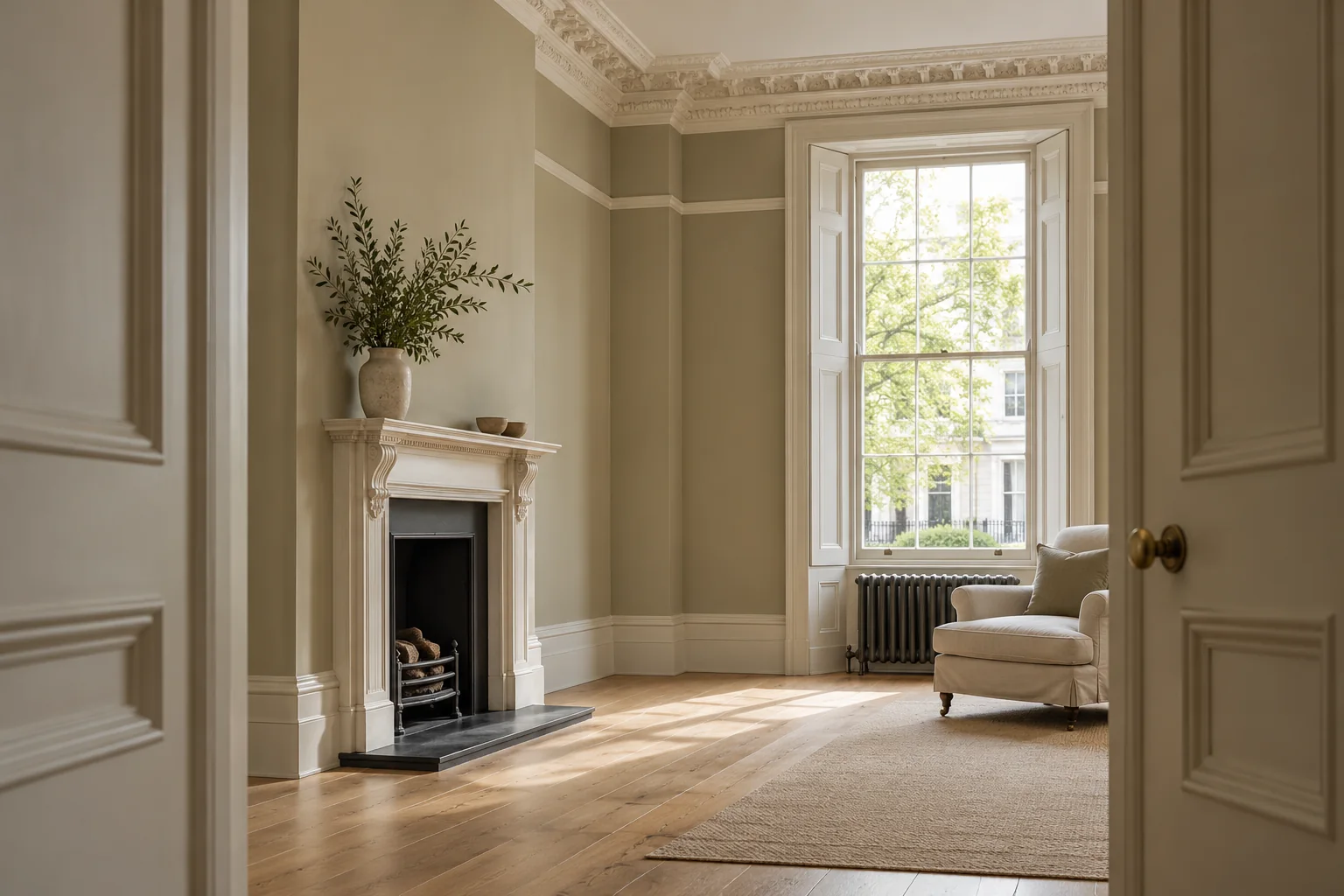
Define repairs before preparation
Historic England recommends the minimum work needed to repair historic windows and favours working on built-in frames in place where possible. Where components are removed, it advises recording their positions. Ask the person assessing the windows to explain which work belongs to a joinery repair and which belongs to decoration.
The written scope should address damaged timber, putty and fittings without promising that new paint will correct those defects. Agree the limits of preparation around historic glass and moulded profiles. Before handover, include a review of the decorated faces and window operation against the work actually instructed.
References: Historic England: repairing historic windows
Check permissions for the proposed intervention
RBKC lists Queen’s Gate and Thurloe Estate and Smith’s Charity separately, so use the address to find the correct conservation area. Its Article 4 register identifies specific properties and controls. A window replacement, a repair and redecoration are different proposals; describe the one actually intended when seeking advice.
Listed building consent concerns alterations affecting special character, including relevant internal work. Supply the proposed method and any changes to joinery or glazing with the enquiry to the authority. For a flat, also obtain the building’s requirements for exterior windows and who may authorise work to them.
References: RBKC conservation area appraisals and maps · RBKC Article 4 directions by address · Historic England: listed building consent · Historic England: permission for changes to older homes
Reach the external faces without losing access
The Thurloe appraisal records basement lightwells and balconies as part of the terrace arrangement. Show these below or beside the windows when describing access. RBKC highway licensing applies if scaffolding occupies the public highway; parking-space arrangements need their own check.
For upper floors, state the route for equipment and the building’s rules for shared stairs or lifts. Agree how openings will remain secure and how rooms will be ventilated and returned to use in accordance with the selected coating’s instructions. The enquiry should name the person coordinating resident access and any other work at the windows.
References: Thurloe Estate and Smith’s Charity Conservation Area Appraisal · RBKC highways licence conditions
Define the surfaces
Relevant decorating services
Sash window painting
Timber window decoration that considers moving parts, glazing and external exposure.
Woodwork painting
Skirtings, architraves, doors and fitted joinery, with profiles kept clear and finishes consistent.
Shutter painting
Finishing for suitable timber shutters with attention to slats, hinges and moving clearances.
Period property decorating
Careful planning for existing plasterwork, timber details and historic decorative surfaces.
Local property guides
Start with the details
Tell us what needs decorating.
Share the property location, the surfaces involved and the finish you have in mind.