Backed by Hampstead Renovations|Sister Company: Hampstead Chartered Surveyors (RICS Regulated)
Belgravia Painters& Decorators

W11 · W2

Heritage & Period Painting in Notting Hill

Professional heritage & period painting in Notting Hill. Local specialists who understand the unique character and requirements of properties in this area.

About Notting Hill

Notting Hill's reputation as London's most colourful neighbourhood is literally painted onto its architecture. The famous pastel-hued stuccoed houses of Lancaster Road, Elgin Crescent, and Westbourne Park Road are among the most photographed residential streets in the world, and maintaining these distinctive colour schemes requires both skill and sensitivity to the area's evolving aesthetic. Unlike the uniform cream stucco of Belgravia, Notting Hill's palette is varied and individual — soft pinks, powder blues, mint greens, and butter yellows create a streetscape that has become an integral part of the area's identity and commercial appeal. Our work in Notting Hill extends beyond these Instagram-famous facades to the substantial family houses on Ladbroke Grove and Clarendon Road, where five-storey stuccoed terraces rival anything in Kensington for scale and grandeur. The communal gardens of the Ladbroke Estate — a unique arrangement of private gardens shared between the houses surrounding them — create an extraordinary residential environment where maintaining the visual harmony of the surrounding facades is a collective responsibility managed through garden committees. Portobello Road itself and the streets around it present a more eclectic mix: Victorian shopfronts with decorative signwriting, converted industrial spaces, and modern infill developments all requiring different decorating approaches.

Our Heritage Approach

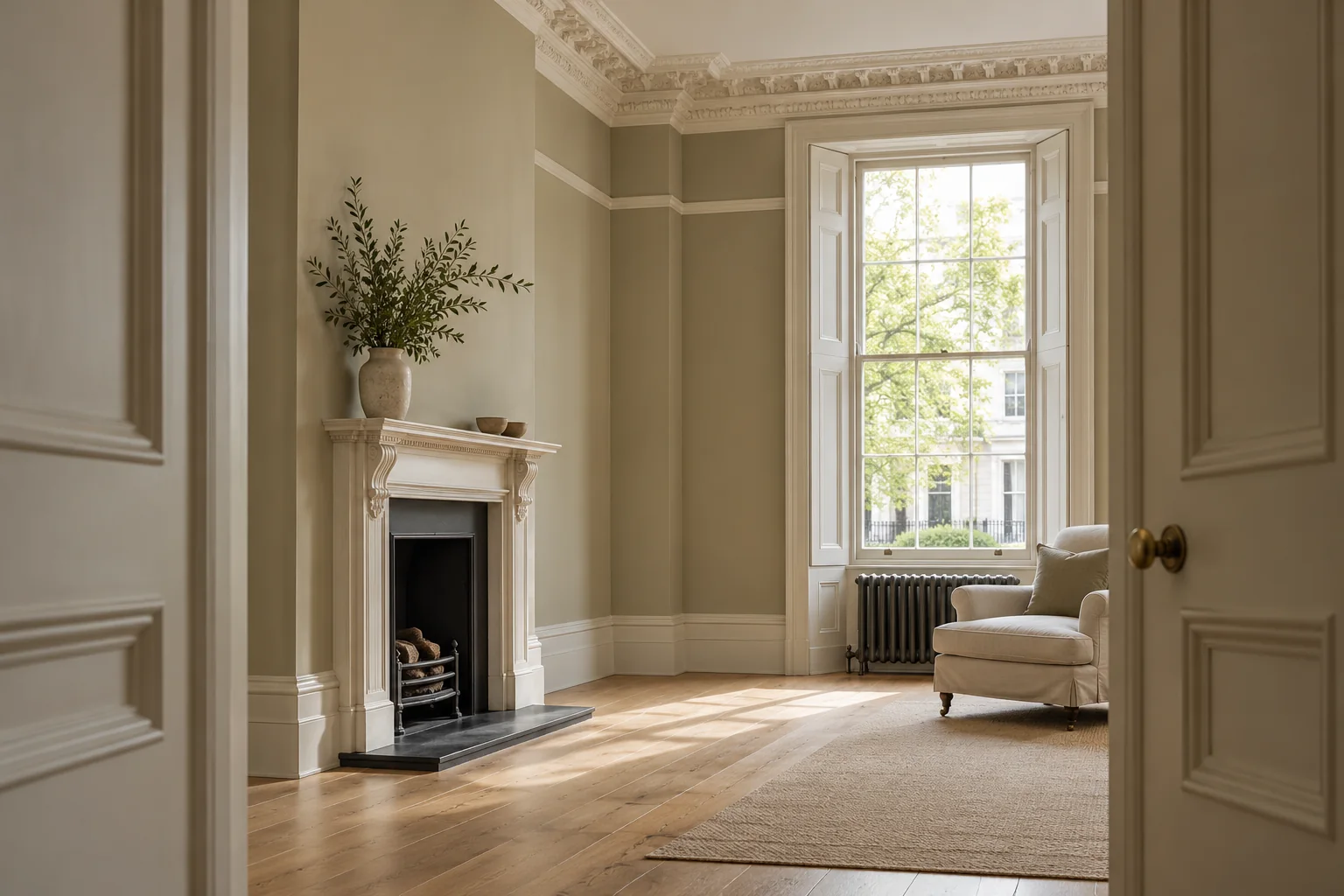
Heritage painting demands a fundamentally different mindset from standard decoration. Modern paints, while convenient, can cause irreversible damage to historic substrates by trapping moisture within lime plaster and soft masonry. We always begin by identifying the original materials and understanding how the building was designed to manage moisture. Lime plaster walls receive breathable lime wash or mineral paint rather than vinyl emulsions that create a vapour barrier. Original timber joinery is treated with linseed oil systems that penetrate the wood and allow it to breathe, rather than film-forming acrylics that can blister and trap rot beneath the surface. Where previous unsympathetic decoration has been applied, we can carefully remove modern coatings to reveal and restore the original finishes beneath. Our preparation techniques are deliberately gentle: we avoid power tools on delicate mouldings, hand-scrape rather than heat-strip original lead paint, and use consolidants rather than fillers wherever possible to preserve as much historic fabric as we can. Beyond standard decoration, our local expertise in Notting Hill includes comprehensive period property decorator, specialist Georgian house painting, and full-service Victorian painting restoration. We are recognized throughout the Kensington & Chelsea area for our meticulous approach to heritage painting London, ensuring every project meets the uncompromising standards expected by our clients.

Heritage & Period Painting in Notting Hill

Our heritage & period painting service in Notting Hill combines deep local knowledge with specialist expertise. We understand the unique character of properties in this area and tailor every project to meet the specific requirements of Notting Hill homes and buildings.

Properties in Notting Hill

Notting Hill's housing ranges from the grandest early Victorian stuccoed terraces to modest mid-Victorian cottages, with substantial modern development alongside. The houses around Ladbroke Square and Stanley Crescent are among the most impressive in west London — tall, deeply moulded stucco facades with Corinthian pilasters, heavy cornices, and first-floor balconies running the full width of the house. Lansdowne Road and Lansdowne Crescent contain similarly grand properties arranged around the communal gardens. Further north towards Westbourne Park, the scale reduces to three-storey terraces that have been extensively converted into flats, with the characteristic Notting Hill treatment of brightly painted stucco. Pembridge Square and Pembridge Crescent offer mansion blocks and large converted houses in the area closest to Notting Hill Gate. The Portobello Road area includes commercial conversions and loft apartments above the market shops, creating unusual spaces that require creative decorating solutions.

Heritage & Conservation

The Ladbroke Conservation Area covers much of Notting Hill and is one of the most significant in the borough. While Notting Hill is known for its colourful facades, this does not mean anything goes — RBKC conservation area policy requires that new paint colours maintain the area's established character, and a formal application may be needed for significant colour changes. The Ladbroke Estate's garden committees also exercise influence over exterior colours of properties around their gardens, though enforcement varies. Article 4 directions apply throughout the conservation area. Individually listed buildings include several on Ladbroke Grove and around the communal garden squares. The area's heritage as a 19th-century speculative development means that many properties share design elements — identical cornicing profiles, matching pilaster designs — that should be maintained during restoration. Historic paint analysis can reveal original colour schemes that may differ significantly from current fashions.

What We Deliver

  • Paint analysis and historical colour research for authentic period schemes
  • Application of lime wash, distemper, and casein paints on appropriate substrates
  • Linseed oil paint systems for original timber windows, doors, and shutters
  • Breathable mineral paint systems for listed building exteriors
  • Restoration of decorative plasterwork including cornicing and ceiling roses
  • Gilding and specialist finishes on architectural ornament
  • Careful preparation of original lime plaster without damaging historic fabric
  • Liaison with conservation officers and heritage consultants
  • Detailed photographic records of work for planning compliance

FAQs About Heritage & Period Painting in Notting Hill

The duration depends on the size and condition of the property. For most Notting Hill homes we estimate between three days and two weeks for heritage painting, with a detailed timeline provided after our free survey.

Notting Hill properties can have specific access requirements including parking restrictions, building management rules and scaffold permits. We handle all logistics as part of our service so you don't need to worry about the details.

Parts of Notting Hill fall within conservation areas where exterior changes may require planning consent. We check the specific regulations for your property before starting and ensure all heritage painting work complies with local authority requirements.

Pricing for heritage painting in Notting Hill varies depending on the property size, condition and specification of finishes. We provide a free, no-obligation survey and detailed written quote so you know exactly what to expect before any work begins.

We have extensive experience working in Notting Hill and understand the local property styles, access challenges and any estate or conservation regulations. Our team delivers premium heritage painting with a five-year guarantee and minimal disruption to your routine.

Ready for Expert Heritage in Notting Hill?

Get a free, no-obligation quote for your heritage & period painting project in Notting Hill. We respond within 24 hours.