
Planning guides
Exterior decorating access in Westminster & RBKC
Plan exterior decoration around local building materials, conservation checks, scaffold licences, parking, red-route loading and protected entrances.
Exterior decoration brings together three decisions: what the building needs, what can be changed and how the work can be reached. Prepare them together before requesting a programme. Photographs should show the complete elevation, its immediate surroundings and the route for materials, with close views of defects as a separate record.
Describe the elevation and the area below it
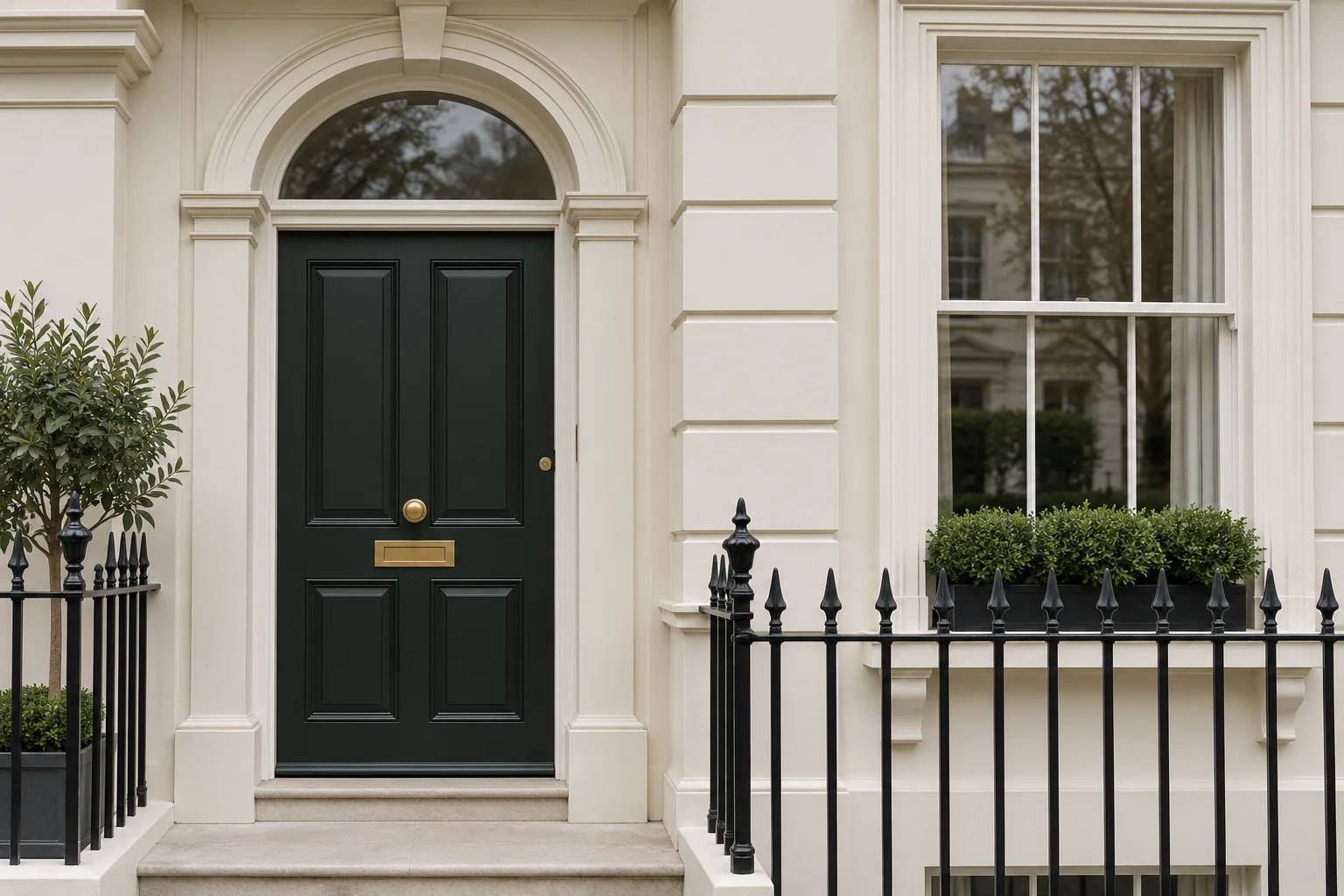
Pimlico’s conservation audit identifies railed basement lightwells and projecting entrance details. Chelsea’s appraisal also records houses close to the pavement and behind narrow lightwells. For either arrangement, include the lowest surfaces, steps and doors in the enquiry rather than cropping the photograph at ground-floor windows.
Mark painted render, timber, ironwork and exposed masonry separately. Identify stains or failed repairs that need investigation before decoration. State whether the brief includes both sides of railings, porch ceilings and concealed door edges. Ask for the access proposal to cover those surfaces as well as the upper façade.
References: Pimlico Conservation Area Audit · Chelsea Conservation Area Appraisal
Settle the finish and the permission question
Historic England notes that exterior redecoration can require consent where a listed building’s character changes, and that some conservation areas have specific colour controls. Describe the exact proposal to the relevant authority. Changing a colour, coating previously unpainted material and renewing an existing finish should not be presented as the same operation.
For Westminster, check the conservation-area information; in RBKC, consult the property search and address-specific directions. Ask for unresolved controls to be clarified before ordering. Include any owner-supplied estate or lease requirements and keep approved samples with the material schedule.
References: Historic England: redecoration · Westminster conservation areas and boundaries · RBKC conservation areas and property search · RBKC Article 4 directions by address
Identify the highway authority and access licence
Westminster licenses apparatus such as scaffolding and cherry pickers on the public highway. RBKC similarly requires highways licences for temporary structures. TfL licenses activities on its own road network, the red routes. Establish who controls the actual frontage before deciding which application is appropriate.
Ask the access provider to define the footprint, the space for erection and removal, and the route past doors and lightwells. Record who is responsible for the application and for maintaining access. Permission to occupy the highway does not decide the separate question of what decorative changes are acceptable to the building.
References: Westminster temporary structure licences · RBKC highways licence conditions · TfL highway licences on red routes
Keep loading, parking and reserved space distinct
Westminster’s trade permit covers eligible parking during works; a bay suspension addresses reserved space. RBKC’s suspension advice includes qualifying maintenance work using tradespeople’s vans. TfL loading bays remain subject to signed loading rules. Choose the arrangement for the task rather than assuming that unloading permission covers a full working day.
Check the exact postcode and route with TfL’s charging-zone tool. Send the unloading position and route through the property with the enquiry, including any shared gates or passages. Allow the building manager’s delivery arrangements to inform the sequence of work.
References: Westminster trade parking permits · Westminster parking suspensions and dispensations · RBKC parking suspensions advice · TfL: loading on red routes · TfL: Congestion Charge postcode and map search
Agree what happens before and after the painting
Keep repair work, access equipment and decoration as explicit parts of the quotation. Confirm protection for glazing, planting and neighbouring surfaces, and record where materials can be stored. Follow the chosen coating’s application and drying instructions when discussing weather and timing. At handover, retain the product references and finish schedule for the surfaces actually decorated.
Define the surfaces
Relevant decorating services
Exterior painting
Decoration of external timber, render and metalwork, planned around condition and access.
Sash window painting
Timber window decoration that considers moving parts, glazing and external exposure.
Front door painting
Entrance door finishes with careful preparation around panels, mouldings and hardware.
Period property decorating
Careful planning for existing plasterwork, timber details and historic decorative surfaces.
Local property guides
Start with the details
Tell us what needs decorating.
Share the property location, the surfaces involved and the finish you have in mind.