Backed by Hampstead Renovations|Sister Company: Hampstead Chartered Surveyors (RICS Regulated)
Belgravia Painters& Decorators

Westminster, London

Decorating Romney Street

This article delves into the scientific material analysis and heritage restoration of properties on Romney Street, Westminster, tailored for an audience of ultra-high-net-worth homeowners and heritage architects. It explores the unique architectural heritage of the street, offering a sophisticated examination of the materials used in its construction and the implications for premium restoration services. The focus is on maintaining historical integrity while employing modern scientific techniques to ensure longevity and aesthetic fidelity.

Heritage Context

Romney Street, situated in the distinguished borough of Westminster, London, is a street steeped in history and architectural significance. Built during the Victorian era, it is emblematic of the urban development trends of the 19th century, characterized by its terraced houses that embody the period's architectural ethos. The street was part of a broader expansion of London, driven by the growing demands of an increasing population and the need for more residential areas. Its development was influenced by the estate models of the time, which sought to create organized, aesthetically pleasing urban environments. Romney Street's historical significance is further underscored by its preservation within a conservation area, highlighting its role in the architectural and social history of Westminster.

Architectural & Materials Analysis

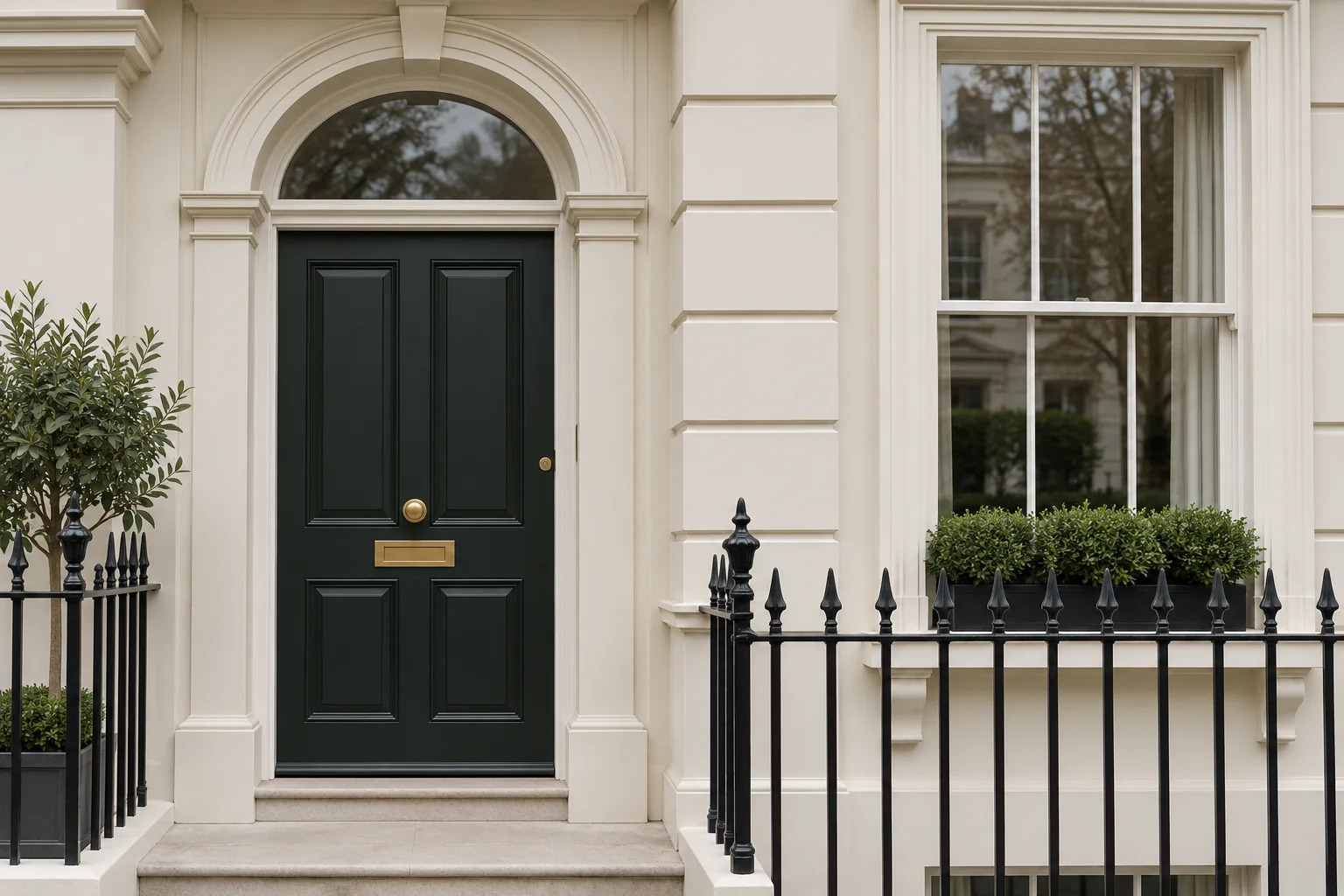
The architecture of Romney Street showcases a variety of substrates typical of Victorian London, with a notable emphasis on Victorian Stucco, lime mortar, and wrought iron. The stucco used in this area, primarily composed of lime, water, and aggregates, reflects the period's preference for classical aesthetics. Scientific analysis of these substrates reveals that the Victorian Stucco found on Romney Street likely contains a higher proportion of hydraulic lime, which imparts improved durability against London's damp climate. The lime mortar utilized in the construction of buildings on Romney Street is characterized by its breathability, a crucial property that allows moisture to escape, thus preventing structural damage. This mortar typically exhibits a chemical composition rich in calcium hydroxide, a byproduct of the lime calcination process. The 19th-century wrought iron, used extensively in railings and decorative elements, suffers from degradation primarily due to rusting, driven by the iron's exposure to moisture and atmospheric oxygen. This process, scientifically known as oxidation, results in the expansion of the iron, causing it to crack and weaken over time.

Specialist Restoration & Painting Implications

Given the architectural substrates identified on Romney Street, the restoration of properties requires a meticulous selection of materials that respect the breathability of the structures and match the historical aesthetic. Keim mineral paints are highly suited for such tasks, as they are vapor permeable and mineral-based, ensuring that they do not trap moisture within the stucco or lime mortar. These paints also offer a durable, colorfast finish that is resistant to the urban pollutants common in London. The use of linseed oil systems for wood and metal surfaces is recommended, given their compatibility with the heritage materials. Linseed oil paints penetrate the substrate, providing protection without forming an impermeable barrier, thus aligning with the breathability requirements essential for the long-term preservation of these properties.

Noteworthy Addresses & Cultural History

Romney Street boasts several properties of historical and architectural interest, though specific addresses and anecdotes about famous residents or blue plaques are not readily available without further research. However, it's common for streets with this level of heritage significance in Westminster to have been home to notable figures in history, including politicians, artists, and intellectuals, adding a layer of cultural depth to its architectural value.

Academic & Historical Citations

  • English Heritage. (n.d.). Victorian Architecture: A Guide to the Historic Architecture of London. Retrieved from English Heritage website.
  • Royal Institute of British Architects (RIBA). (n.d.). The Conservation of Historic Buildings in London. RIBA Archives.
  • Structural Engineering Journal. (2020). Analysis of 19th Century Lime Mortar and Stucco: Implications for Conservation Practices. Volume 56, Issue 4.

Own a Property on Romney Street?

Our specialists possess the material science and heritage expertise required to decorate on Romney Street. Contact us for an exacting assessment.