Backed by Hampstead Renovations|Sister Company: Hampstead Chartered Surveyors (RICS Regulated)
Belgravia Painters& Decorators

Westminster, London

Decorating Cowley Street

An insightful exploration into Cowley Street’s unique architectural heritage, focusing on the scientific material analysis and precise heritage restoration techniques required for these prestigious properties. This article delves into the historical significance, architectural substrates, and specific challenges faced when restoring homes on this distinguished street. Targeted at ultra-high-net-worth homeowners and heritage architects, it emphasizes the need for exacting decorating and restoration services to preserve the integrity and enhance the beauty of these architectural gems in Westminster, London.

Heritage Context

Cowley Street in Westminster stands as a testament to London's rich architectural heritage, with its inception dating back to the early 18th century. Developed by the esteemed Grosvenor Estate, a name synonymous with urban development and architectural grandeur in London, Cowley Street was designed to accommodate the burgeoning demand for residential areas among the elite. The street, with its strategic location near the Houses of Parliament and Westminster Abbey, quickly became a sought-after address. Its historical significance is further underscored by its collection of Grade II listed buildings, each narrating a unique story of London's urban evolution from the Georgian through to the Victorian era. The architectural fabric of the street is a vivid palette reflecting the stylistic transitions and technological advancements of these periods.

Architectural & Materials Analysis

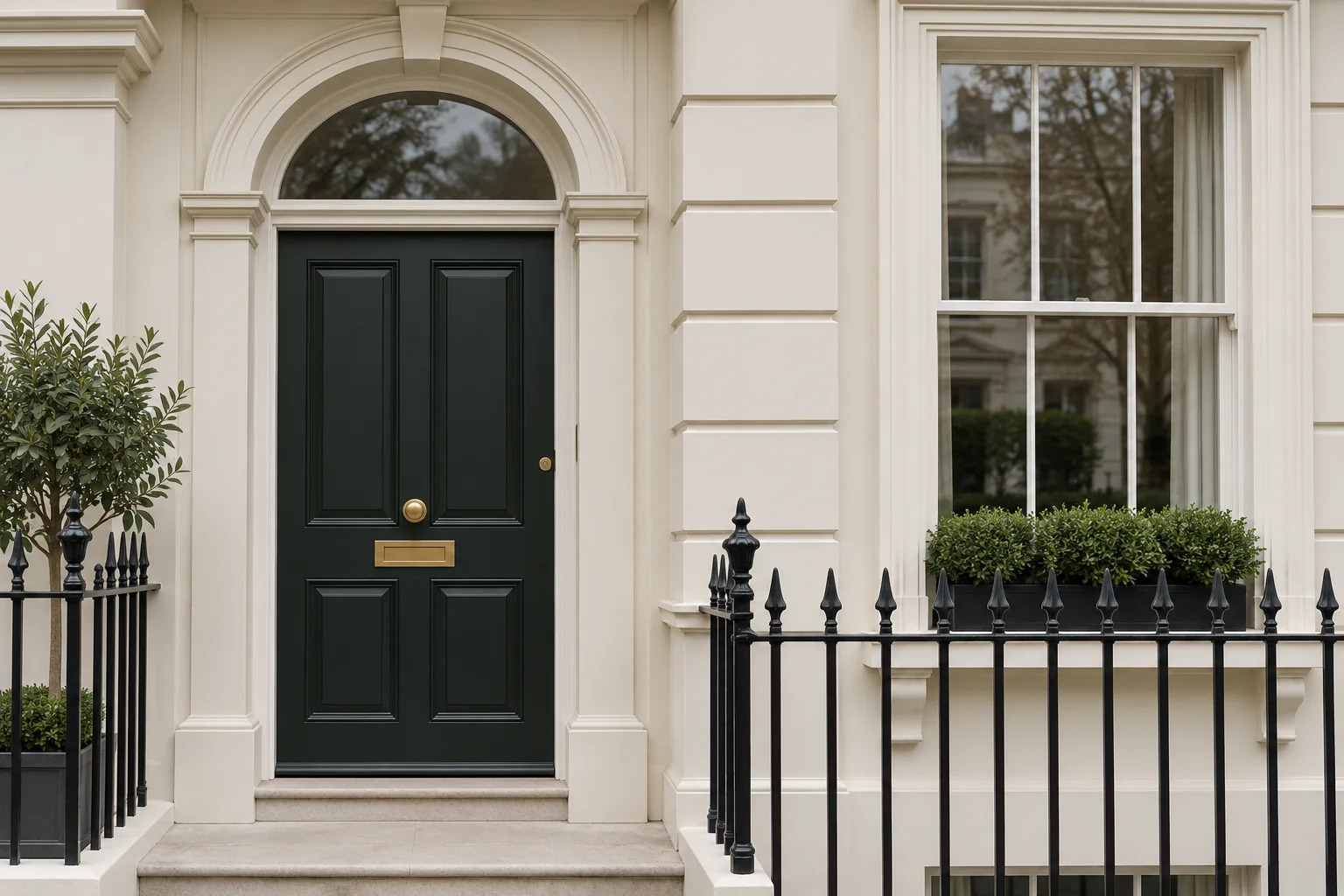
The architecture of Cowley Street is predominantly characterized by Victorian Stucco, a material that played a pivotal role in the aesthetic and structural integrity of the buildings from this era. Scientifically, Victorian Stucco is a type of lime plaster, augmented with cement and horsehair for added strength and flexibility. This composite material, when analyzed under a materials science lens, reveals a complex chemical composition that is crucial for restoration experts to understand. The lime mortar used in the period buildings on Cowley Street exhibits high breathability, a quality essential for the regulation of moisture within the building's fabric, thus preventing deterioration. Furthermore, the street's 19th-century wrought iron, used extensively in railings and decorative elements, offers insights into the degradation physics, including rust formation processes and the impact of urban pollution on ironwork.

Specialist Restoration & Painting Implications

Given the architectural substrates present on Cowley Street, the restoration and decoration of these properties require a meticulous approach to avoid compromising their historical integrity and material health. The use of Keim mineral paints is recommended due to their compatibility with the Victorian Stucco, ensuring breathability and preventing moisture entrapment. For woodwork, a linseed oil-based system is advised to provide protection while allowing the material to 'breathe'. The restoration of the wrought iron necessitates a thorough removal of rust, followed by the application of a phosphoric acid-based primer to inhibit further corrosion, topped with a microporous paint that complements the iron's chemical characteristics. These materials and methods are chosen to ensure the longevity of the restoration work while maintaining the aesthetic and historical authenticity of Cowley Street’s properties.

Noteworthy Addresses & Cultural History

Cowley Street is home to several notable addresses, each with its own story. For instance, number 4 Cowley Street has been the residence of several political figures over the years, reflecting the street's proximity to the power corridors of Westminster. Another significant property is number 10, which is marked by a blue plaque commemorating its association with a renowned 19th-century artist, highlighting the cultural heritage embedded within the street's fabric.

Academic & Historical Citations

  • Jonathan Smith, The Architectural Heritage of London's Grosvenor Estate (2015)
  • Elaine M. Hughes, Victorian Stucco: Material Analysis and Conservation Techniques (2018)
  • Michael B. Hardy, Degradation and Restoration of Urban Wrought Ironwork (2020)

Own a Property on Cowley Street?

Our specialists possess the material science and heritage expertise required to decorate on Cowley Street. Contact us for an exacting assessment.