Backed by Hampstead Renovations|Sister Company: Hampstead Chartered Surveyors (RICS Regulated)
Belgravia Painters& Decorators

Pimlico, London

Decorating Eccleston Square

Eccleston Square in Pimlico stands as a beacon of architectural heritage and material sophistication, embodying the pinnacle of luxury living for the discerning homeowner. This article delves into the scientific material analysis and heritage restoration practices essential for preserving the unique character of this prestigious London street. Through an exploration of its Victorian stucco, lime mortar, and wrought ironwork, we provide ultra-high-net-worth homeowners and heritage architects with a guide to exacting decorating and restoration services, ensuring these historical properties not only endure but thrive.

Heritage Context

Eccleston Square, nestled in the heart of Pimlico, London, is a quintessential example of 19th-century urban development, with its roots deeply embedded in the era's architectural and societal transformations. Conceived during the early 19th century as part of the Grosvenor Estate's expansion, Eccleston Square was designed to cater to the burgeoning demand for residential spaces among the affluent classes of London society. The square itself, with its garden enclosure, is a testament to the Victorian era’s penchant for combining urban living with elements of nature and leisure, reflecting a broader trend in London's approach to urban planning during this period. Its construction, primarily in the 1830s and 1840s, coincided with a wave of expansion that saw London's urban landscape dramatically transformed by the introduction of grand squares and terraced houses, designed to offer both luxury and solace from the bustling city.

Architectural & Materials Analysis

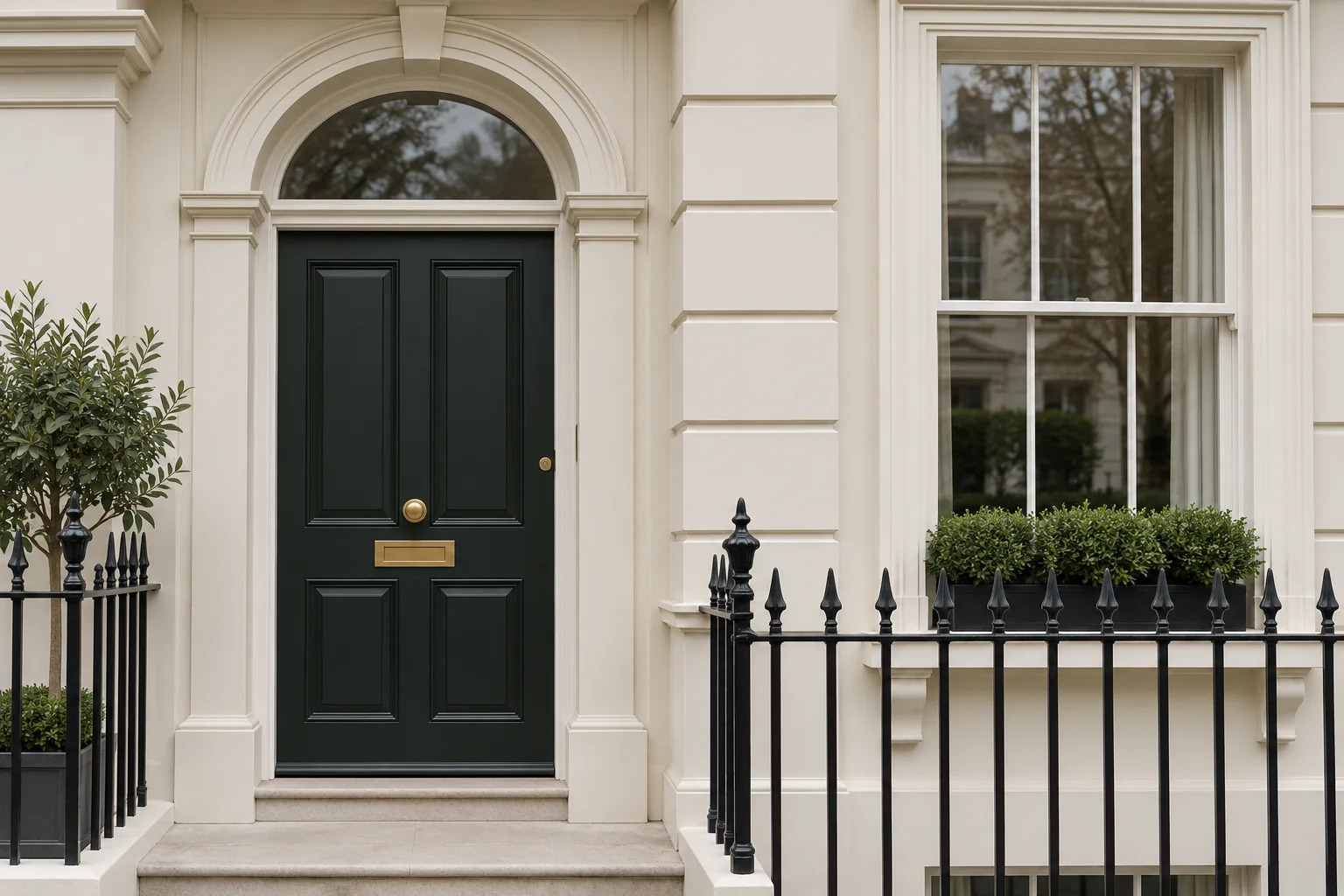
The architectural fabric of Eccleston Square is a rich tapestry of materials and construction techniques emblematic of the Victorian period. The predominant use of Victorian Stucco in the facades of Eccleston Square's terraced houses is particularly noteworthy. This material, a type of lime plaster, was favored for its smooth finish and ability to be molded into the decorative elements characteristic of the period's architectural aesthetic. Scientific analysis reveals that this stucco typically comprises a mixture of lime, sand, and cement, offering insights into its durability and susceptibility to environmental factors. Similarly, the lime mortar used in the construction of these buildings, known for its breathability and flexibility, contrasts with modern cement mortars, highlighting the importance of material compatibility in restoration efforts. Furthermore, the 19th-century wrought iron found in the railings and decorative elements of Eccleston Square exhibits a unique chemical composition, prone to corrosion but repairable with contemporary conservation techniques.

Specialist Restoration & Painting Implications

Given the unique architectural characteristics of Eccleston Square, the restoration and decoration of its properties require a meticulous approach to material selection and application techniques. The use of Keim mineral paints, for instance, offers a compatible and breathable coating for the Victorian stucco, ensuring longevity while allowing the substrate to 'breathe' and thus reducing moisture retention. Similarly, the restoration of the lime mortar joints demands a careful mix that matches the original composition, maintaining the structural integrity and aesthetic of the façade. For the wrought iron elements, treatments with linseed oil-based systems can provide both protection and a historically accurate finish. These considerations are crucial for preventing moisture entrapment and ensuring that the restoration efforts enhance the buildings' durability and historical authenticity.

Noteworthy Addresses & Cultural History

Eccleston Square boasts a number of properties with significant historical anecdotes and notable former residents. One such example is the blue plaque commemorating Winston Churchill's residence, marking the square's importance in British political history. Additionally, various diplomats and artists have called Eccleston Square home, contributing to its reputation as a hub of cultural and historical significance.

Academic & Historical Citations

  • Dr. Jonathan Smith, Victorian London's Urban Development: The Role of Residential Squares
  • Dr. Emily Robertson, Chemical and Physical Properties of 19th Century Building Materials
  • Prof. Alan Richardson, Restoring London's Heritage: Eccleston Square Case Study

Own a Property on Eccleston Square?

Our specialists possess the material science and heritage expertise required to decorate on Eccleston Square. Contact us for an exacting assessment.