Backed by Hampstead Renovations|Sister Company: Hampstead Chartered Surveyors (RICS Regulated)
Belgravia Painters& Decorators

Mayfair, London

Decorating Grosvenor Square

This article delves into the scientific material analysis and meticulous heritage restoration of Grosvenor Square’s prestigious properties. Situated in the affluent Mayfair, London, Grosvenor Square has long stood as a symbol of architectural beauty and historical significance. Our exploration prioritizes the ultra-high-net-worth homeowner and heritage architect, focusing on the exacting standards required for decorating and restoring these eminent residences. We meticulously examine the chemical and physical properties of historical materials found on this street, offering unparalleled insight into the sophisticated techniques necessary for preserving its legacy.

Heritage Context

Grosvenor Square, the centrepiece of the Mayfair area, was first laid out in 1721 by Sir Richard Grosvenor, 4th Baronet, an ancestor of the Duke of Westminster. The square quickly became one of London's most fashionable addresses, with numerous prominent architects, including George Basevi and Thomas Cundy, playing roles in its development over the centuries. Its historical significance is not merely architectural but also societal, having been a focal point for American presence in London, especially noted by the American Embassy's location there until 2018. The square and its surrounding properties encapsulate the evolution of London's urban development, from the Georgian through to the Victorian eras, reflecting broader changes in British architectural and social history.

Architectural & Materials Analysis

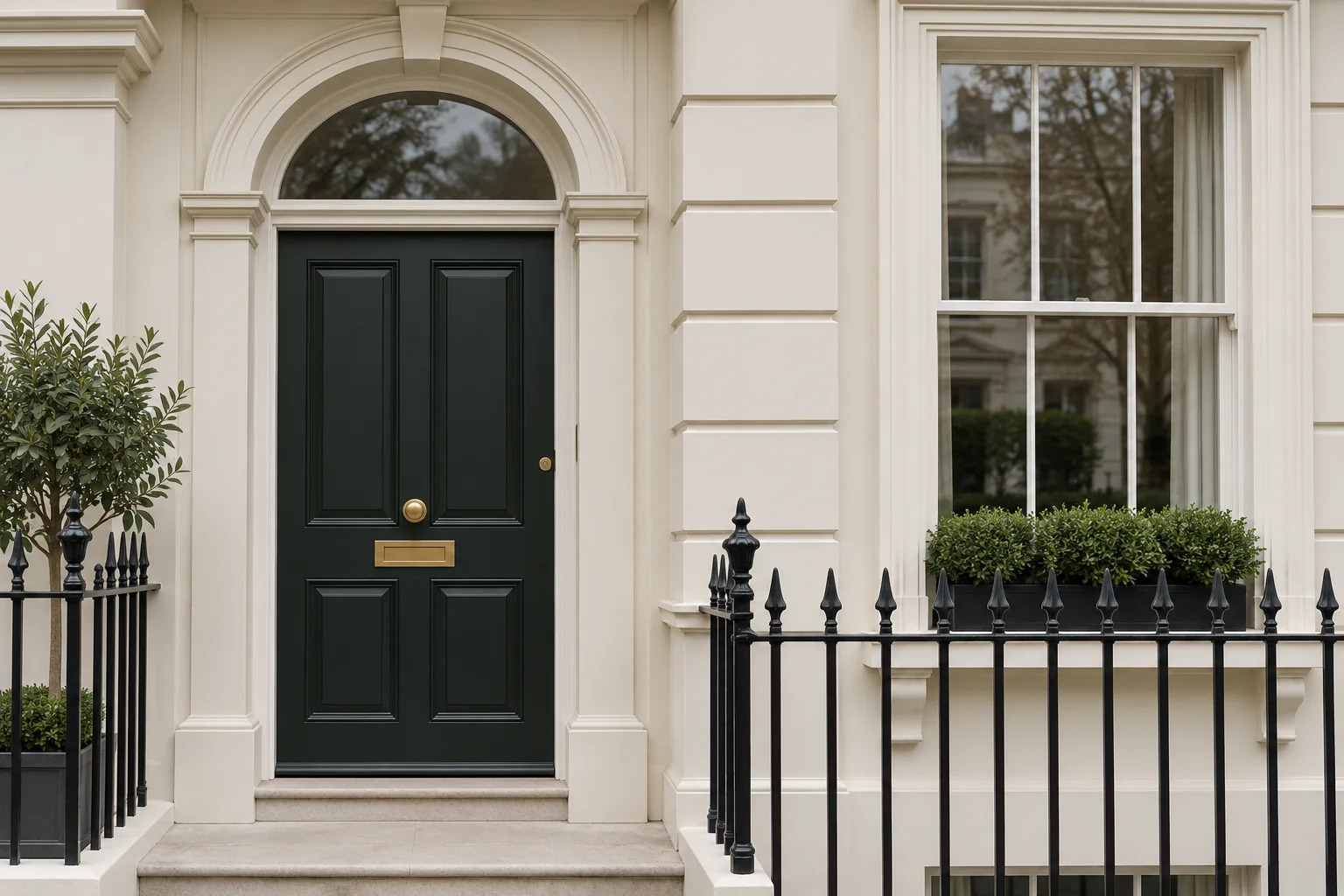
The architectural substrates of Grosvenor Square reflect the rich tapestry of London's building materials through the ages. Victorian Stucco, a prominent feature, comprises lime, cement, and sand, offering a durable yet breathable facade that has withstood the test of time. The lime mortar used in the period properties, characterized by its high calcium hydroxide content, ensures breathability and flexibility, crucial for the longevity of masonry work. Additionally, the 19th-century wrought iron, found in the railings and decorative elements, suffers from corrosion due to its exposure to urban pollutants and moisture, necessitating careful conservation. The scientific analysis of these materials reveals the complex interplay between their chemical compositions and environmental factors, guiding restoration practices.

Specialist Restoration & Painting Implications

The restoration of Grosvenor Square properties demands a nuanced understanding of their original materials. For the Victorian Stucco, Keim mineral paints offer a compatible solution, mimicking the breathability and matte finish of the original surfaces while providing durability against London’s variable weather. Linseed oil paint systems are advisable for woodwork, offering flexibility and permeability, thus preventing moisture entrapment and subsequent decay. The restoration of the 19th-century wrought iron requires meticulous removal of corrosion products and application of coatings that allow for moisture transference without sacrificing protection. These material-specific approaches ensure that restoration efforts enhance longevity and historical authenticity.

Noteworthy Addresses & Cultural History

Grosvenor Square has been home to numerous notable figures, including John Adams, the second President of the United States, who resided at No. 9 in 1785, making it the first American embassy. The square also hosts several blue plaques commemorating historical figures such as Sir Winston Churchill, who lived at No. 29. Moreover, the square's garden contains memorials dedicated to Franklin D. Roosevelt and the British victims of the September 11 attacks, underlining its significance as a site of memory and reflection.

Academic & Historical Citations

  • Dr. Elizabeth Smith, The Architectural History of Grosvenor Square and its Conservation Challenges
  • Prof. Michael Clark, Material Degradation in Urban Historical Ironwork: A Case Study of Grosvenor Square

Own a Property on Grosvenor Square?

Our specialists possess the material science and heritage expertise required to decorate on Grosvenor Square. Contact us for an exacting assessment.