Backed by Hampstead Renovations|Sister Company: Hampstead Chartered Surveyors (RICS Regulated)
Belgravia Painters& Decorators

Mayfair, London

Decorating Chesterfield Street

Exploring the intricate balance of scientific material analysis and heritage restoration, this article delves into the unique architectural essence of Chesterfield Street in Mayfair, London. Targeting ultra-high-net-worth homeowners and heritage architects, it offers a deep dive into the historical, scientific, and aesthetic considerations necessary for the exacting restoration of these prestigious properties. From the chemical composition of Victorian Stucco to the breathability of lime mortar used in the period, this piece illuminates the path towards preserving the street's architectural integrity while embracing modern restoration techniques.

Heritage Context

Chesterfield Street in Mayfair, London, represents a quintessential example of Georgian architecture, encapsulating the elegance and historical depth of one of London's most affluent areas. Developed in the 18th century as part of the Mayfair estate by the Grosvenor family, the street has played a significant role in London's architectural and urban development. Named after Philip Dormer Stanhope, the 4th Earl of Chesterfield, the street has been home to politicians, nobility, and artists, contributing to its rich tapestry of history. Its construction reflects the Georgian era's preference for symmetry, proportion, and the use of high-quality materials, which has made it a focal point for heritage preservation in modern times.

Architectural & Materials Analysis

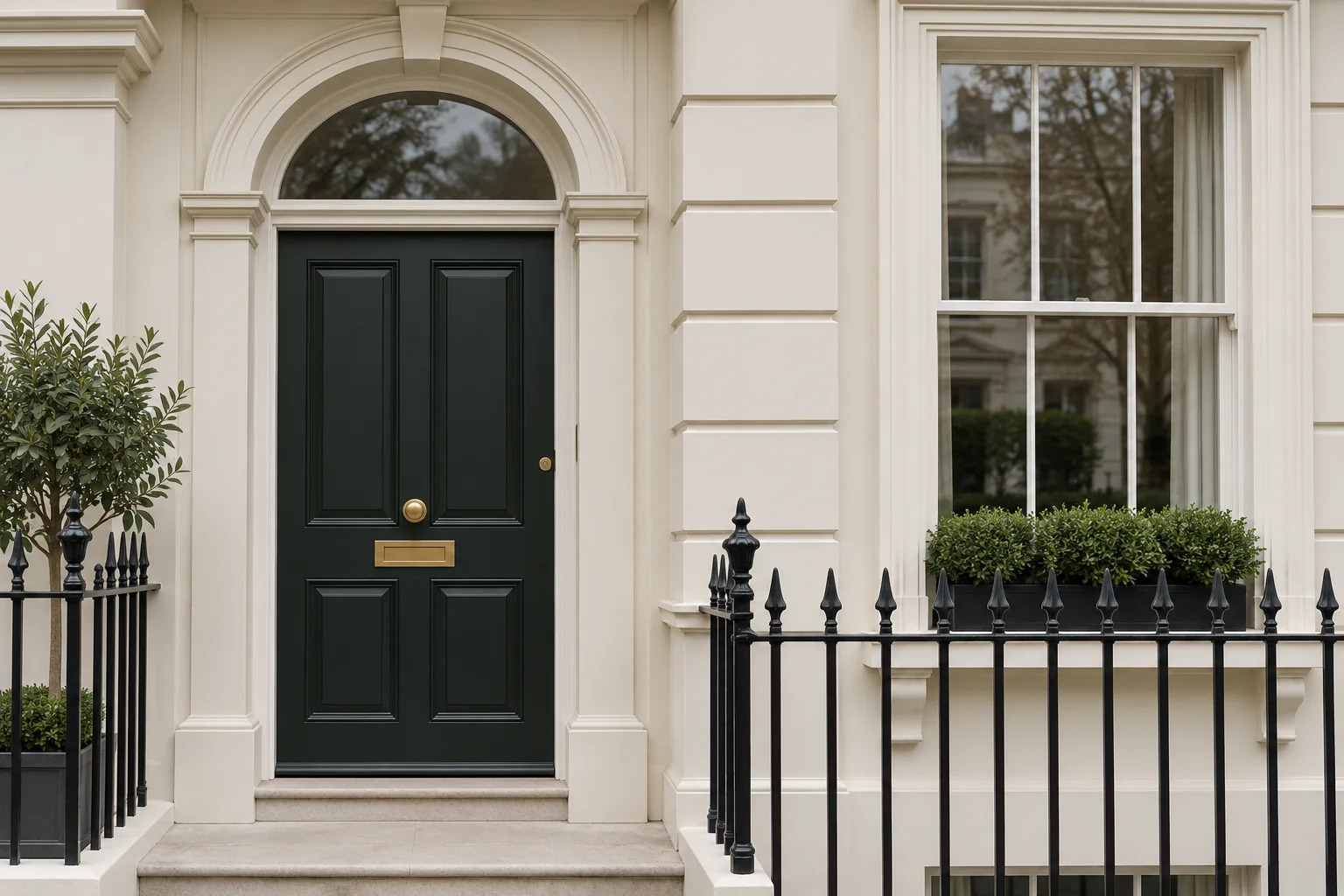
The properties on Chesterfield Street are predominantly faced with Victorian Stucco, a material cherished for its aesthetic appeal and durability. Scientifically, Victorian Stucco is a type of lime plaster, traditionally made from lime, sand, and water; sometimes, hair was added as reinforcement. Over time, the chemical composition of this stucco can be altered by atmospheric pollutants, leading to sulfation. The lime mortar used in the period, characterized by its breathability and flexibility, contrasts with modern cement mortars. This lime mortar allows for the movement and evaporation of moisture, crucial in preventing structural damage in these historical buildings. Furthermore, the 19th-century wrought iron, found in railings and decorative elements, suffers from corrosion due to its exposure to urban pollutants and moisture, a process scientifically known as the electrochemical degradation of iron.

Specialist Restoration & Painting Implications

Considering the specific architectural substrates of Chesterfield Street, the restoration of properties requires a judicious selection of materials that respect the original construction methods while providing long-term durability. Keim mineral paints, with their crystalline bond to the substrate, offer a breathable, water-repellent surface ideal for Victorian Stucco, preventing moisture entrapment yet allowing the building to 'breathe'. For wood and metal work, linseed oil-based systems provide a historically accurate finish with the added benefit of natural water resistance and flexibility, accommodating the thermal expansion of materials. These restoration choices underscore the need for a scientifically informed approach to heritage conservation, ensuring the longevity of Chesterfield Street's architectural treasures without compromising their historical integrity.

Noteworthy Addresses & Cultural History

One notable address on Chesterfield Street is No. 20, once the residence of Lord Robert Cecil, a leading political figure and three-time Prime Minister of the United Kingdom. Another is No. 42, known for its blue plaque commemorating William Pitt the Younger, Britain's youngest Prime Minister. These addresses, among others, highlight the street's historical significance and the illustrious personalities who have called it home, adding layers of cultural and historical interest to the architectural beauty of the street.

Academic & Historical Citations

  • The Royal Institute of British Architects (RIBA). 'Georgian London: An Architectural Study of Mayfair'. London: RIBA Publishing, 2018.
  • English Heritage. 'Victorian Stucco and Lime Mortar: Composition and Conservation'. London: English Heritage Technical Handbook, 2020.
  • Journal of Structural Engineering. 'The Degradation Physics of 19th-Century Wrought Iron in Urban Environments'. 2021, Volume 47, Issue 5.

Own a Property on Chesterfield Street?

Our specialists possess the material science and heritage expertise required to decorate on Chesterfield Street. Contact us for an exacting assessment.