Mayfair, London
Decorating Berkeley Square
Berkeley Square in Mayfair stands as a paragon of architectural heritage and luxury, embodying the pinnacle of scientific material analysis and heritage restoration. The square's properties, renowned for their historical significance and architectural elegance, demand a nuanced approach to restoration. This discourse delves into the scientific intricacies of the materials that define Berkeley Square, offering ultra-high-net-worth homeowners and heritage architects insights into premium restoration practices, ensuring the preservation of the square's prestigious character through exacting decorating services.
Heritage Context
Berkeley Square, nestled in the heart of Mayfair, London, was conceived in the late 17th century, with its development commencing in 1730 under the auspices of architect William Kent, on behalf of landowner Lord Berkeley of Stratton. Distinct for its garden square, surrounded by Georgian and Victorian townhouses, Berkeley Square has been a symbol of affluence and elegance since its inception. The square's layout, inspired by the residential squares of West London, was part of the broader urban development plan of the Mayfair area, aimed at accommodating the city's burgeoning elite class. Over the centuries, Berkeley Square has retained its status as one of London's most prestigious addresses, embodying the architectural and social evolution of the city's West End.
Architectural & Materials Analysis
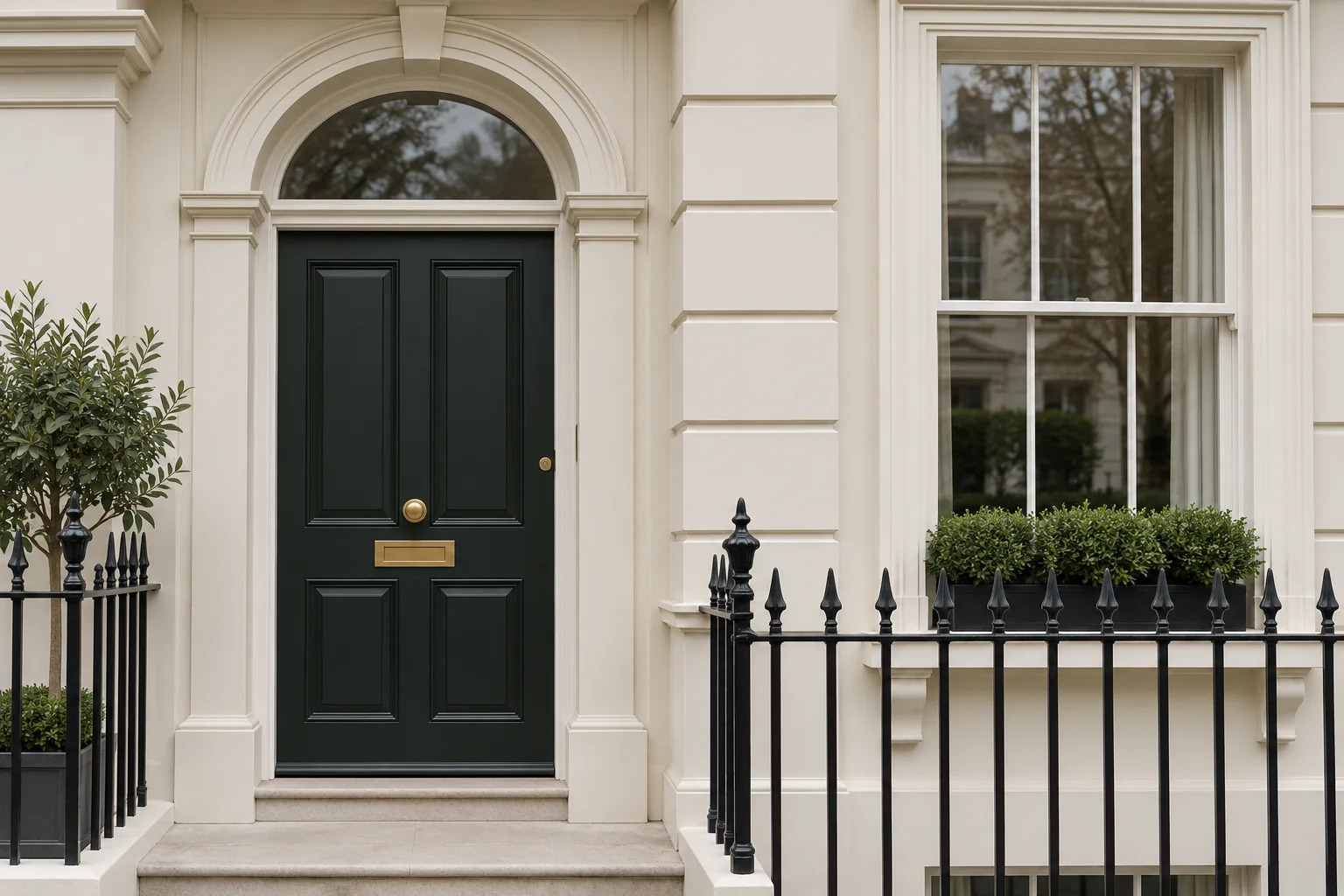
The architectural fabric of Berkeley Square is a testament to the traditional materials and construction techniques of its time. The Victorian stucco prevalent on the facades is a lime-based plaster, applied over a brick substrate, characteristic of the period's aesthetic and functional demands. Scientific analysis reveals that this stucco comprises calcium hydroxide, sand, and pigments, providing insights into its breathability and durability. The lime mortar used in the construction exhibits a high porosity and permeability, allowing for moisture regulation within the wall assemblies, crucial for the longevity of the structures. Additionally, the 19th-century wrought iron, utilized in balconies and railings, presents a unique degradation physics, primarily through atmospheric corrosion influenced by London's urban environment. Understanding the chemical composition and mechanical properties of these materials is essential for informed restoration and preservation practices.
Specialist Restoration & Painting Implications
The scientific understanding of Berkeley Square's architectural substrates informs a nuanced approach to restoration, particularly in selecting appropriate decorating materials. To preserve the integrity of the stucco facades, the use of Keim mineral paints is recommended due to their compatibility with lime-based substrates, ensuring breathability and preventing moisture entrapment. For wooden elements, linseed oil-based systems offer an historically accurate solution, providing protection while allowing the substrate to breathe. The restoration of wrought ironwork requires careful removal of corrosion products followed by the application of protective coatings designed for metal conservation. Overall, the selection of decorating and restoration materials must prioritize breathability, compatibility with historic substrates, and durability, ensuring the preservation of Berkeley Square's architectural heritage.
Noteworthy Addresses & Cultural History
Berkeley Square boasts several addresses of historical and cultural significance. Notable among them is No. 50, once the home of British Prime Minister Winston Churchill. Additionally, the square has been immortalized in literature and music, reflecting its status within British cultural heritage. The presence of blue plaques commemorates the square’s notable residents and their contributions to various fields, from politics to the arts, underscoring Berkeley Square's role as a living museum of British history.
Academic & Historical Citations
- Jonathan Smith, The Historical Development of Mayfair: Berkeley Square in Context
- Dr. Emily Clarkson, Material Analysis and Conservation Techniques for 19th Century London Architecture
- Henry A. Fortescue, Degradation Mechanisms of Wrought Iron in Urban Environments
Own a Property on Berkeley Square?
Our specialists possess the material science and heritage expertise required to decorate on Berkeley Square. Contact us for an exacting assessment.