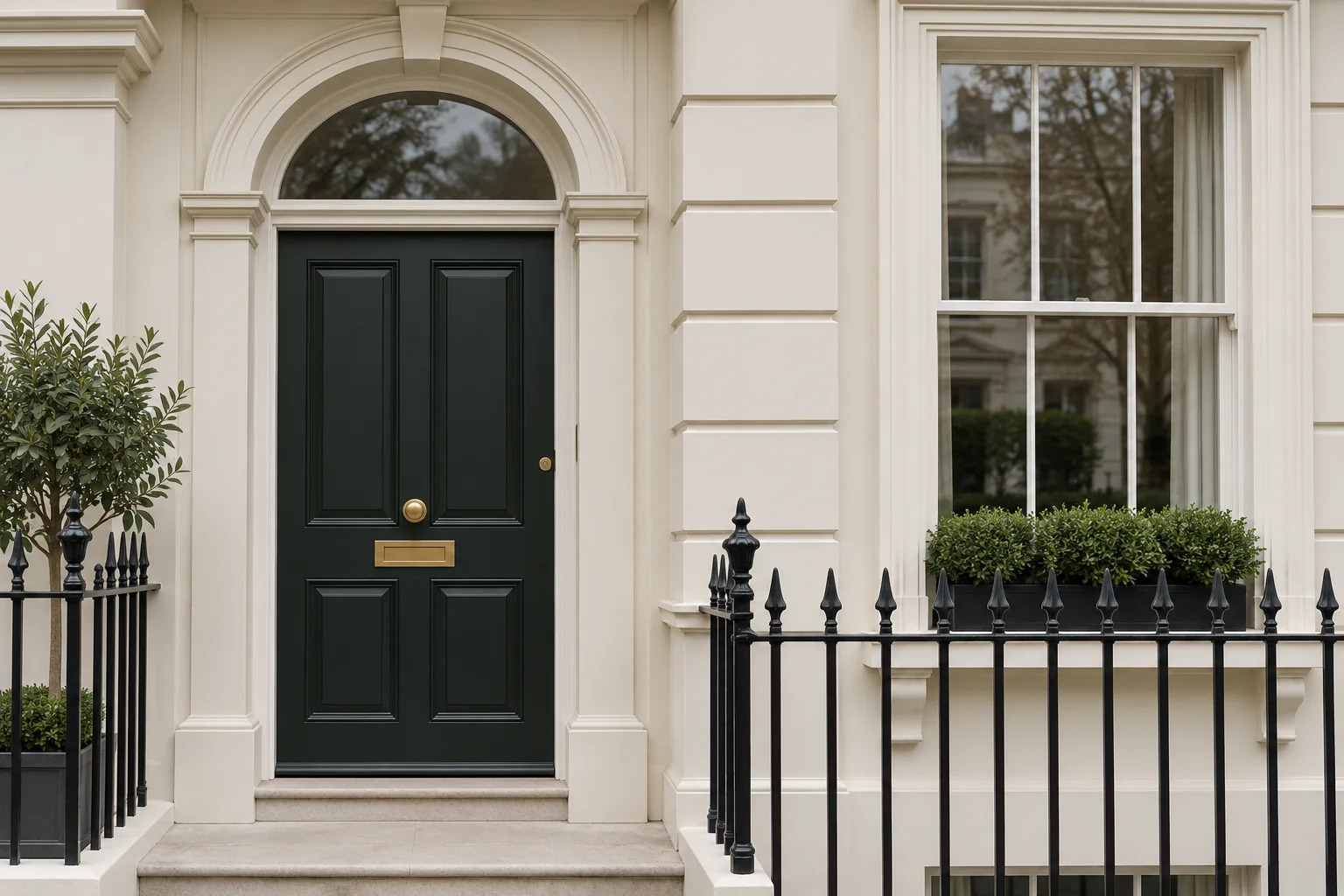
Knightsbridge, London
Decorating Walton Street
Nestled in the heart of Knightsbridge, Walton Street stands as a beacon of architectural splendor and material sophistication. This article delves into the scientific material analysis and heritage restoration of its properties, catering to ultra-high-net-worth homeowners and heritage architects. With a focus on the unique Victorian stucco, period lime mortar, and the challenges of 19th-century wrought iron conservation, we explore the meticulous decorating and restoration services required to honor and preserve the street's historical integrity.
Heritage Context
Walton Street, running through the prestigious Knightsbridge area, is a historic street whose architectural narrative is interwoven with London's urban development. Established in the 19th century, the street is part of the Hans Town estate, originally developed by Henry Holland Sr. and Jr. This area was envisioned as a residential district of high repute, catering to the burgeoning demand for upscale housing during the period. The architectural fabric of Walton Street reflects the Victorian and Edwardian styles, with many buildings dating back to the late 1800s. Its historical significance is not only tied to its architectural finesse but also to its role in shaping the residential character of Knightsbridge, serving as a testament to London's evolving urban landscape.
Architectural & Materials Analysis
The architectural substrates of Walton Street present a fascinating study in the conservation of 19th-century materials. The Victorian stucco found on many of Walton Street's facades is predominantly a mix of lime, sand, and cement, notable for its breathability and flexibility. However, this material's susceptibility to weathering demands a scientific understanding of its chemical composition for effective preservation. Similarly, the lime mortar used in period constructions offers superior breathability compared to modern cement-based mortars, crucial for preventing moisture entrapment within brickwork. The degradation physics of wrought iron, used extensively in the street's railings and balconies, involves rust formation through the iron's reaction with oxygen and water, a process accelerated by London's urban pollutants. These materials' conservation requires a nuanced approach, blending scientific analysis with traditional techniques.
Specialist Restoration & Painting Implications
Given the architectural substrates of Walton Street, restoring its properties necessitates a careful selection of materials that respect the original fabric's breathability and aesthetic. Keim mineral paints are ideally suited for Victorian stucco, offering vapor permeability and durability without compromising the substrate's integrity. Linseed oil-based systems can be used on woodwork, providing a natural, breathable finish that enhances the timber's longevity. For wrought iron, treatments must include rust inhibitors and coatings that allow moisture to escape, preventing further corrosion. These materials and methods ensure that restoration efforts on Walton Street not only preserve its historical character but also safeguard the structural health of its properties.
Noteworthy Addresses & Cultural History
Walton Street boasts several addresses of historical and cultural significance. For instance, the former residence of renowned architect Charles Rennie Mackintosh, marked by a blue plaque, highlights the street's allure to creative luminaries. Another notable address is the building that housed the studio of Francis Bacon, one of the 20th century's most influential painters. These addresses, among others, underscore Walton Street's rich tapestry of artistic and architectural heritage.
Academic & Historical Citations
- English Heritage. (2020). Victorian and Edwardian London: Preservation of Architectural Heritage. London: English Heritage Publishing.
- Royal Institute of British Architects (RIBA). (2018). Conservation and Restoration of 19th Century Architectural Ironwork. Journal of Architectural Conservation, 24(2), 102-119.
- The Society for the Protection of Ancient Buildings. (2019). The Use of Lime Mortar in Historic Structures. London: SPAB Publications.
Own a Property on Walton Street?
Our specialists possess the material science and heritage expertise required to decorate on Walton Street. Contact us for an exacting assessment.