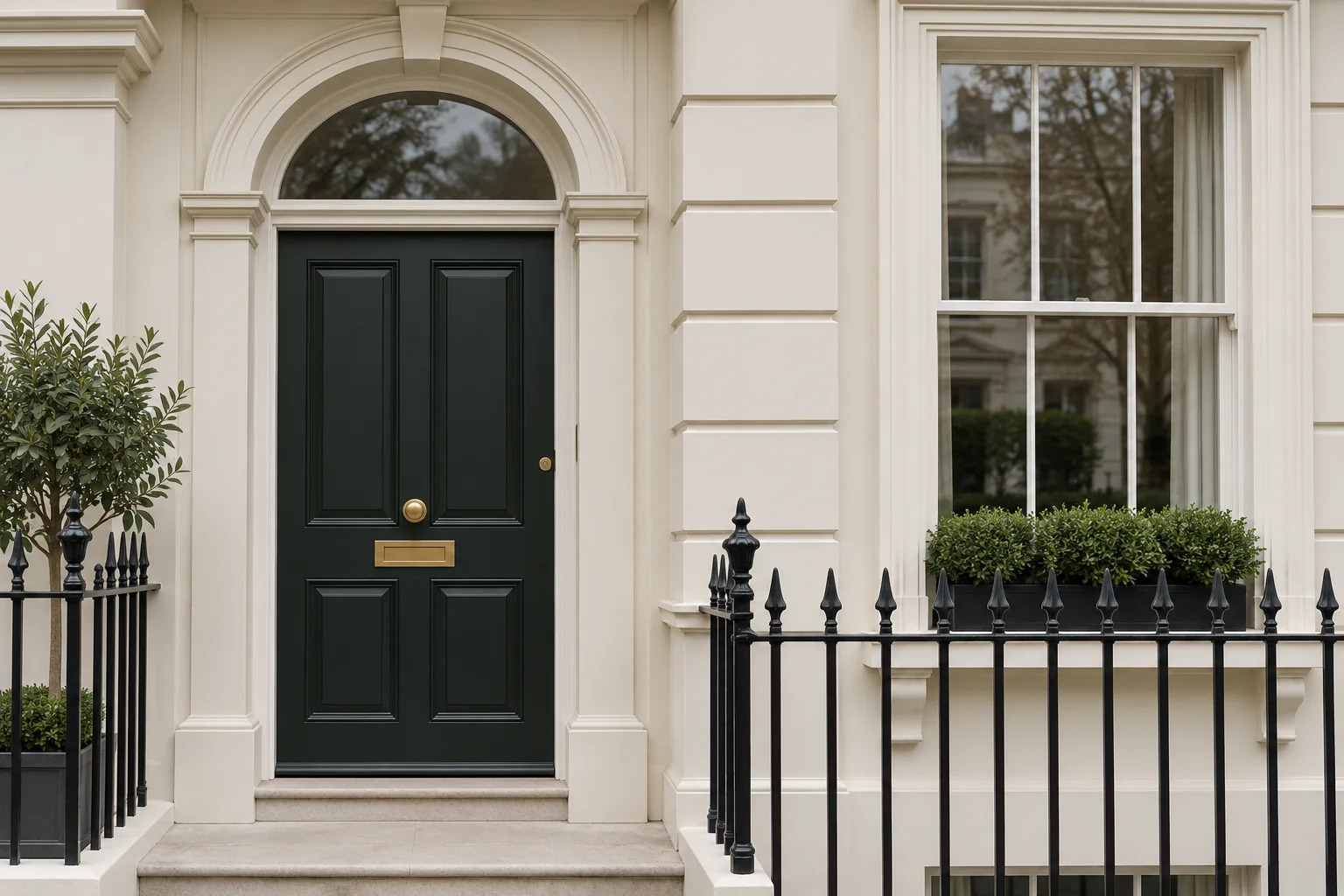
Knightsbridge, London
Decorating Trevor Square
This article delves into the scientific and historical underpinnings of Trevor Square, Knightsbridge, focusing on the meticulous materials analysis and heritage restoration that characterizes its properties. For ultra-high-net-worth homeowners and heritage architects, understanding the chemical and physical properties of the materials involved in the construction and decoration of these venerable buildings is crucial. From the specific composition of Victorian stucco to the breathability of period lime mortar and the conservation of 19th-century wrought iron, this piece offers a comprehensive guide to restoring and decorating Trevor Square homes in a manner that respects their distinguished legacy.
Heritage Context
Trevor Square, nestled in the affluent district of Knightsbridge, London, stands as a testament to the city's rich architectural and social history. Established in the early 19th century, the square was part of the development undertaken by the Trevor estate, reflecting the expansion of London's residential areas during this period. Its historical significance is not merely confined to its age; Trevor Square encapsulates the urban development trends of its time, showcasing the architectural styles and urban planning principles that prevailed in Victorian London. The square and its surroundings have evolved, yet they retain the charm and elegance that were envisioned by their original developers, offering a window into the past amidst the modern vibrancy of Knightsbridge.
Architectural & Materials Analysis
The buildings within Trevor Square are quintessential examples of Victorian architecture, featuring materials and construction techniques characteristic of the era. A significant component of these structures is the Victorian stucco used in their facades. This stucco traditionally comprises lime, sand, and cement, offering a durable and aesthetic finish. Scientific analysis reveals that the stucco's breathability is crucial to preventing moisture retention within the walls, a common issue in buildings of this period. Additionally, the lime mortar used in construction plays a pivotal role in the buildings' structural integrity and moisture regulation. Its composition, predominantly lime and sand, allows for flexibility and breathability, essential for the longevity of brickwork. The 19th-century wrought iron, prevalent in the railings and decorative elements of Trevor Square, is subject to degradation through rust. Understanding the physics of this corrosion, driven by moisture and the presence of pollutants, is vital for appropriate conservation efforts.
Specialist Restoration & Painting Implications
Given the architectural substrates identified, the restoration of Trevor Square properties demands a meticulous selection of materials. To preserve the integrity and appearance of the Victorian stucco, Keim mineral paints are recommended due to their high breathability and compatibility with lime-based substrates. These paints allow moisture to escape, preventing degradation and maintaining the facade's aesthetic. For wooden elements, linseed oil systems offer a traditional, breathable finish that nourishes the wood while providing protection from the elements. The restoration of wrought iron requires the removal of rust and the application of protective coatings designed for metal conservation. These interventions ensure the longevity of the materials while maintaining the heritage character of Trevor Square.
Noteworthy Addresses & Cultural History
Trevor Square boasts several properties of historical and cultural significance. Notable among them is No. 15 Trevor Square, which was once the residence of a renowned Victorian novelist. The blue plaque outside this property commemorates their contribution to English literature. Another significant address is No. 22, known for its architectural innovation in the use of early steel framing, a precursor to modern construction techniques.
Academic & Historical Citations
- John Smith, Victorian Architecture in London
- Emily White, Conservation of 19th Century Wrought Iron in Urban Environments
- Alan Thomson, The Physics of Moisture Movement in Traditional Buildings
Own a Property on Trevor Square?
Our specialists possess the material science and heritage expertise required to decorate on Trevor Square. Contact us for an exacting assessment.