Backed by Hampstead Renovations|Sister Company: Hampstead Chartered Surveyors (RICS Regulated)
Belgravia Painters& Decorators

Knightsbridge, London

Decorating Sloane Street

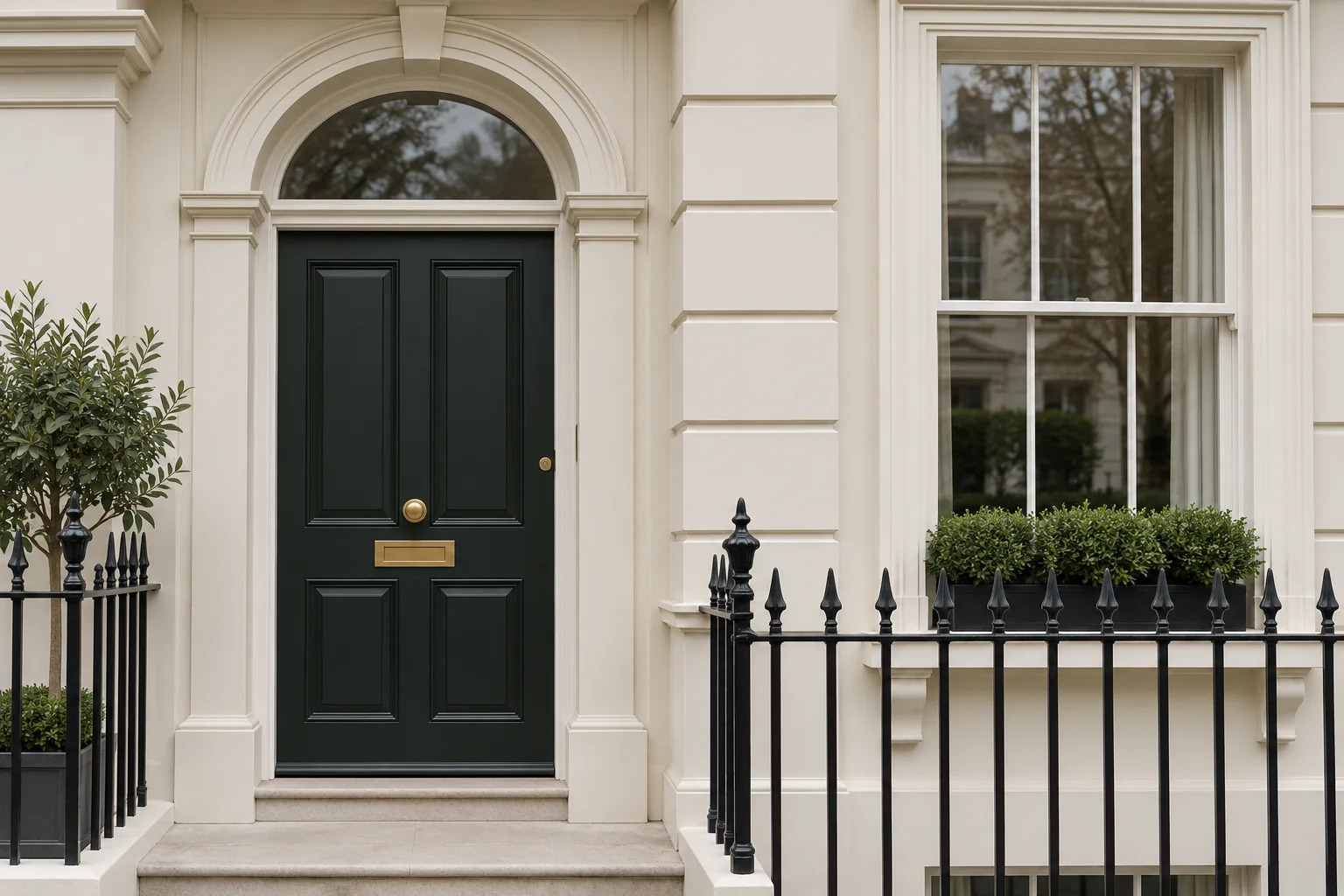
This article delves into the intricate world of Sloane Street in Knightsbridge, focusing on the scientific material analysis and meticulous heritage restoration of its properties. Aimed at discerning ultra-high-net-worth homeowners and heritage architects, we explore the unique architectural elements, from Victorian Stucco to 19th-century wrought iron, and discuss the specialized decorating and restoration practices essential for maintaining and enhancing the street's historical integrity. Our approach combines rigorous scientific investigation with a deep appreciation for Sloane Street's architectural beauty, ensuring every restoration project respects its rich heritage while meeting the highest standards of modern luxury.

Heritage Context

Sloane Street, nestled in the affluent Knightsbridge area of London, is a testament to the city's architectural evolution and historical grandeur. Developed in the late 18th century by the Sloane Estate, which was named after Sir Hans Sloane, the street has since been synonymous with luxury and exclusivity. Its foundation lays on the urban expansion of London during the Georgian era, reflecting the period's architectural aspirations and societal advancements. Sloane Street quickly became a coveted address, attracting nobility and the upper echelons of society with its grandiose homes and proximity to the royal Kensington Gardens. Over the centuries, Sloane Street has maintained its status as a premier residential and shopping district, with its architecture evolving to include Victorian and Edwardian influences, while preserving its Georgian roots. This rich tapestry of history positions Sloane Street as a crucial element in London's urban development narrative, embodying the elegance and prestige of its past.

Architectural & Materials Analysis

The properties on Sloane Street are distinguished by their use of Victorian Stucco, a material prized for its aesthetic appeal and durability. Scientific analysis reveals that this stucco typically comprises a mixture of lime, sand, and cement, adorned on facades to emulate stone. Victorian stucco on Sloane Street often contains specific additives for enhanced weather resistance, reflecting the technological advancements of the era. The breathability of lime mortar used in the period's construction is another noteworthy feature, allowing moisture transfer and evaporation which prevents structural damage. Additionally, the 19th-century wrought iron, found in railings and decorative elements, presents a unique interplay of iron and carbon, susceptible to corrosion but restorable with modern conservation techniques. These materials' chemical and physical properties are crucial in understanding the architectural integrity and degradation mechanisms of Sloane Street's historic buildings.

Specialist Restoration & Painting Implications

Given the unique architectural substrates of Sloane Street, restoring properties requires a nuanced approach to decorating and painting. The use of Keim mineral paints is advocated for Victorian Stucco, due to their unparalleled breathability and compatibility with lime-based substrates. These paints allow for moisture vapor transmission, crucial in preventing the trapping of moisture within walls, which can lead to structural and aesthetic damage. For wood and ironwork, linseed oil-based systems offer a historically accurate finish with modern protective qualities, ensuring longevity and preserving the material's integrity. The restoration of Sloane Street's properties also necessitates a thorough understanding of the breathability requirements of the original construction materials, ensuring that modern interventions do not compromise the buildings' historical fabric.

Noteworthy Addresses & Cultural History

Sloane Street is home to several notable addresses, each with its own rich history. For instance, No. 54 Sloane Street was once the residence of celebrated architect Charles Rennie Mackintosh, marked by a blue plaque. Another historically significant property is No. 118, which served as the London home of famous poet and playwright Oscar Wilde. These addresses, among others, highlight the street's long-standing appeal to figures of cultural and historical significance.

Academic & Historical Citations

  • Dr. Elizabeth Jamieson, The Architectural Heritage of Sloane Street: Materials and Techniques
  • Professor Alistair Scott, Conservation of Victorian Stucco in London's Historic Buildings

Own a Property on Sloane Street?

Our specialists possess the material science and heritage expertise required to decorate on Sloane Street. Contact us for an exacting assessment.