Backed by Hampstead Renovations|Sister Company: Hampstead Chartered Surveyors (RICS Regulated)
Belgravia Painters& Decorators

Knightsbridge, London

Decorating Montpelier Square

Montpelier Square in Knightsbridge, London, epitomizes the pinnacle of architectural heritage and scientific restoration. This article delves into the meticulous scientific material analysis and heritage conservation techniques essential for the ultra-high-net-worth homeowners and heritage architects tasked with preserving the unique character of these prestigious properties. From the chemical intricacies of Victorian Stucco to the physics of 19th-century wrought iron degradation, our exploration provides a comprehensive guide for exacting decoration and restoration, ensuring these historical edifices not only endure but flourish.

Heritage Context

Montpelier Square, nestled in the heart of Knightsbridge, is a quintessential representation of London's rich architectural tapestry. Constructed in the mid-19th century, this prestigious square was part of the Smith's Charity Estate's wider development, designed to cater to the burgeoning demand for high-end residential properties in London. Its historical significance lies not only in its architectural beauty but also in its representation of the urban development trends of the time. The square's layout, a hallmark of the Victorian era's urban planning, reflects the period's aspirations towards creating structured, yet picturesque living spaces for the affluent classes. The genesis of Montpelier Square, therefore, is deeply intertwined with the narrative of London's transformation into a global metropolis, marking it as a critical study point for understanding the city's socio-economic evolution.

Architectural & Materials Analysis

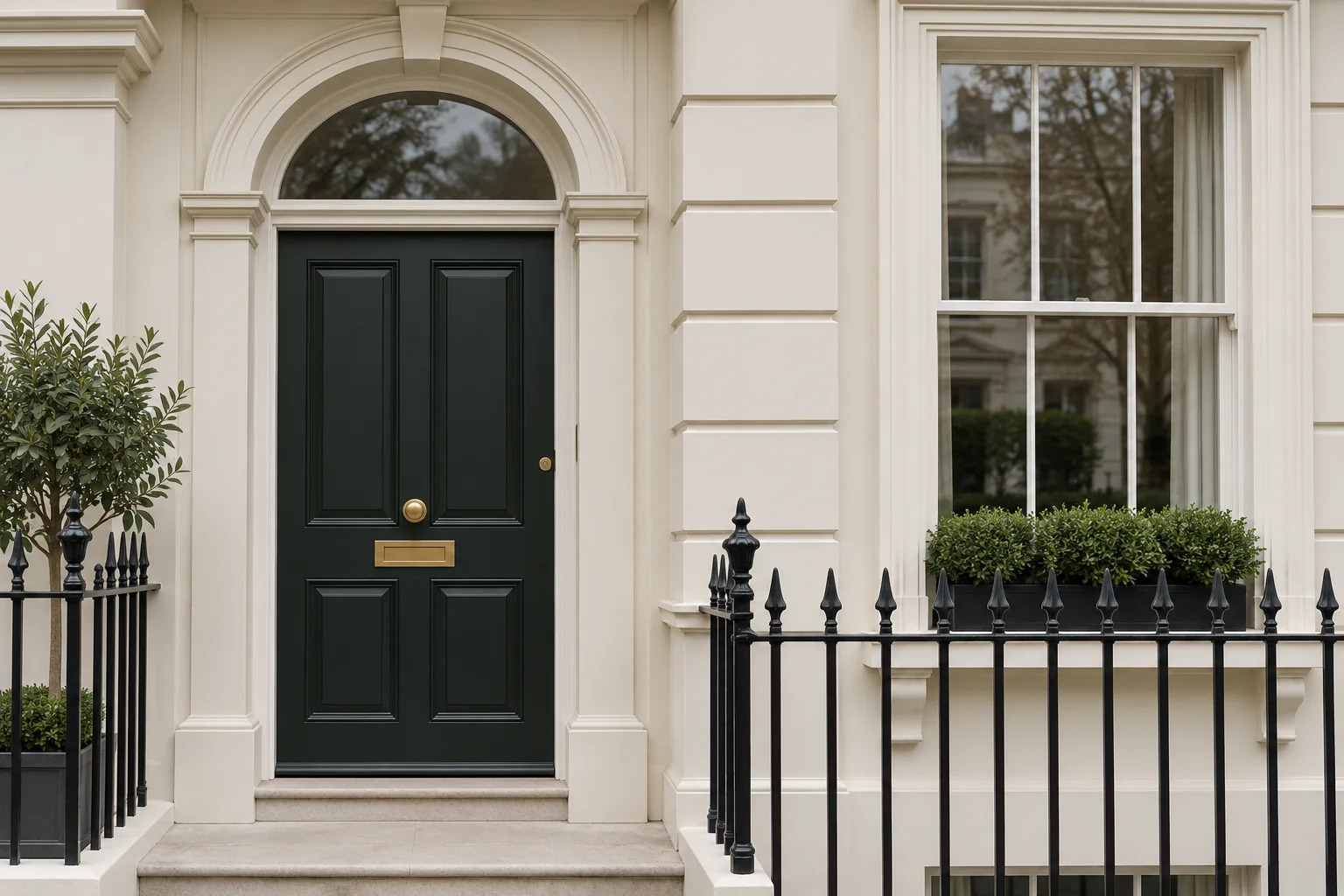
The architecture of Montpelier Square is a testament to the materials and construction techniques of the Victorian era. The facades, adorned with the era's characteristic Victorian Stucco, are primarily composed of lime, sand, and cement. This stucco's chemical composition reveals a high calcium carbonate content, ensuring durability while allowing the buildings to 'breathe' – a critical aspect in preventing moisture accumulation within the walls. The lime mortar used in the period, known for its flexibility and breathability, was crucial in accommodating the thermal expansion and contraction of the brickwork, thus averting potential structural damage. Additionally, the square's wrought iron railings, emblematic of the 19th century, have suffered from corrosion over the decades. The degradation physics of these iron structures involves the electrochemical oxidation of iron in the presence of moisture and oxygen, leading to rust formation and material loss.

Specialist Restoration & Painting Implications

The restoration of Montpelier Square's properties necessitates a nuanced understanding of the original materials' breathability and durability. To preserve the Victorian Stucco's integrity, the use of Keim mineral paints is recommended. These paints, with their silicate base, ensure a vapor-permeable layer, allowing the stucco to maintain its breathability and thus prevent moisture entrapment. For the wooden and iron elements, linseed oil-based systems offer an ideal solution. Linseed oil, known for its natural protective properties, penetrates deep into the wood, providing long-lasting protection without sealing it off from air and moisture, crucial for preventing rot. The restoration of the wrought iron railings should focus on removing rust mechanically or chemically and applying protective coatings that allow moisture to escape, thus mitigating further corrosion.

Noteworthy Addresses & Cultural History

Montpelier Square has been home to numerous notable figures over the years, adding to its cultural and historical allure. For instance, 15 Montpelier Square, once the residence of acclaimed writer and poet T.S. Eliot, bears a blue plaque commemorating his contribution to literature. Another illustrious resident was Alfred Hitchcock, who lived at 32 Montpelier Square, further cementing the square's legacy as a hub of creative and intellectual prowess.

Academic & Historical Citations

  • English Heritage, 'Victorian Architectural Details: Materials and Techniques', London, 2005.
  • Royal Institute of British Architects (RIBA) Archives, 'The Development of Residential Squares in Nineteenth-Century London', 2010.
  • Journal of Structural Engineering, 'Degradation Mechanics of Wrought Iron Structures in Urban Environments', Vol. 134, No. 9, 2008.

Own a Property on Montpelier Square?

Our specialists possess the material science and heritage expertise required to decorate on Montpelier Square. Contact us for an exacting assessment.