Backed by Hampstead Renovations|Sister Company: Hampstead Chartered Surveyors (RICS Regulated)
Belgravia Painters& Decorators

Kensington, London

Decorating Kensington Square

Discover the science and sophistication behind the heritage restoration of Kensington Square, London. This article delves into the material analysis and historical significance of one of London's oldest squares. Targeted at discerning homeowners and heritage architects, it offers insights into the precise decorating and restoration methods required to preserve the unique character of these prestigious properties. From the chemical composition of Victorian stucco to the breathability of lime mortar, learn how to maintain the integrity of these architectural gems without compromising their historical value.

Heritage Context

Kensington Square, one of the earliest residential developments in Kensington, London, represents a pivotal moment in the capital's urban evolution. Conceived in the late 17th century by builder and developer William Watts, the square was part of the broader expansion of London beyond the City's confines. Its establishment in 1685 marked the square as one of London's oldest, predating the grand squares of the Georgian and Victorian eras. Initially surrounded by fields, it became a fashionable address for the upper echelons of society, encapsulating the shift towards planned suburban communities. This historical context underscores the square's importance in understanding London's architectural and social transformation from the 17th century onwards.

Architectural & Materials Analysis

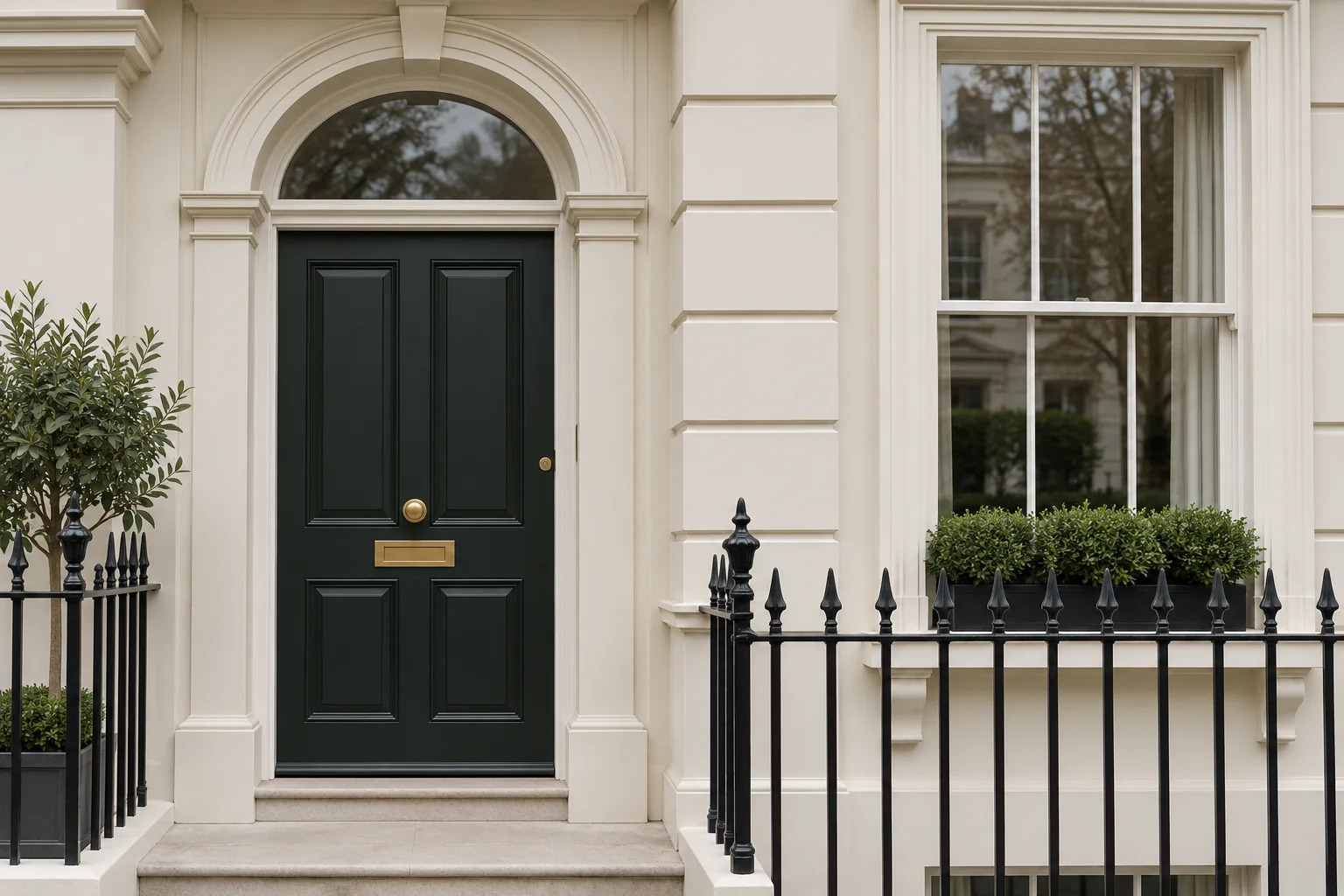
The fabric of Kensington Square is defined by its predominantly Victorian and Georgian architecture, with a specific focus on the Victorian stucco that adorns many of its facades. Scientifically, Victorian stucco is a type of lime plaster, composed of calcium hydroxide, sand, and water. It is notable for its breathability, allowing moisture to evaporate rather than penetrate structural elements. However, the material's susceptibility to carbonation and subsequent loss of its original properties over time necessitates careful consideration in restoration. Similarly, the lime mortar used in period brickwork, consisting primarily of lime and sand, offers excellent breathability but requires regular maintenance to prevent deterioration. The 19th-century wrought iron found in railings and balconies undergoes a degradation process known as rusting, or iron oxide formation, accelerated in urban environments by pollutants. Understanding these materials at a chemical level is crucial for their preservation.

Specialist Restoration & Painting Implications

Given the architectural fabric of Kensington Square, restoration and decorating strategies must prioritize materials that align with the original building practices. For stucco facades, Keim mineral paints offer an ideal solution, providing a vapor-permeable layer that does not trap moisture, thus preventing damage to the lime plaster beneath. Similarly, the use of linseed oil-based paints and treatments for wooden and metal elements respects the historical integrity of the properties while providing protection against the elements. The restoration of lime mortar should adhere to historically accurate ratios of lime to sand, ensuring that any repointing or repairs maintain the wall's breathability and structural integrity. These materials and methods are not only scientifically sound but also essential in preserving the square's heritage for future generations.

Noteworthy Addresses & Cultural History

Kensington Square boasts several addresses of historical and cultural significance. Notably, the former residences of philosopher John Stuart Mill at No. 18 and aviation pioneer Sir George Cayley at No. 20 highlight the square's attraction to influential figures in various disciplines. Additionally, the presence of blue plaques commemorates these and other notable residents, underscoring the square's rich heritage and its role in London's intellectual and social history.

Academic & Historical Citations

  • Dr. Fiona MacLaren, The Chemical and Physical Deterioration of Buildings in London
  • Professor Harold Whitmore, Victorian London's Architectural Materials: Science and Society
  • Catherine Spencer, Conservation of Historic Stucco Facades in London's Residential Architecture

Own a Property on Kensington Square?

Our specialists possess the material science and heritage expertise required to decorate on Kensington Square. Contact us for an exacting assessment.