Backed by Hampstead Renovations|Sister Company: Hampstead Chartered Surveyors (RICS Regulated)
Belgravia Painters& Decorators

Kensington, London

Decorating Kensington Court

Kensington Court, a prestigious address in London, stands as a beacon of architectural heritage and scientific intrigue for ultra-high-net-worth homeowners and heritage architects. This article delves into the meticulous scientific material analysis and heritage restoration practices essential for maintaining the integrity of these historic properties. It emphasizes the unique Victorian substrates, the art of preserving 19th-century stucco, and the sophisticated decorating techniques required to honor the street's legacy while ensuring modern-day functionality and aesthetic appeal.

Heritage Context

Kensington Court, nestled in the heart of Kensington, London, is a street steeped in historical significance. Developed in the late 19th century by the notable real estate developer Jonathan Carr, Kensington Court was envisioned as an exclusive residential area for London's elite. The development was part of the broader expansion of Kensington, which transformed it from a semi-rural area into one of London's most desirable districts. This transformation was closely tied to the Great Exhibition of 1851, which catalyzed the development of the surrounding areas, including the creation of cultural landmarks such as the Victoria and Albert Museum and the Natural History Museum. Kensington Court's architectural landscape is dominated by grand Victorian and Edwardian houses, reflecting the opulence and architectural innovations of the era. These residences were designed with a keen eye for detail, incorporating the latest advancements in building materials and techniques of the time, making them a fascinating subject for architectural historians and conservationists.

Architectural & Materials Analysis

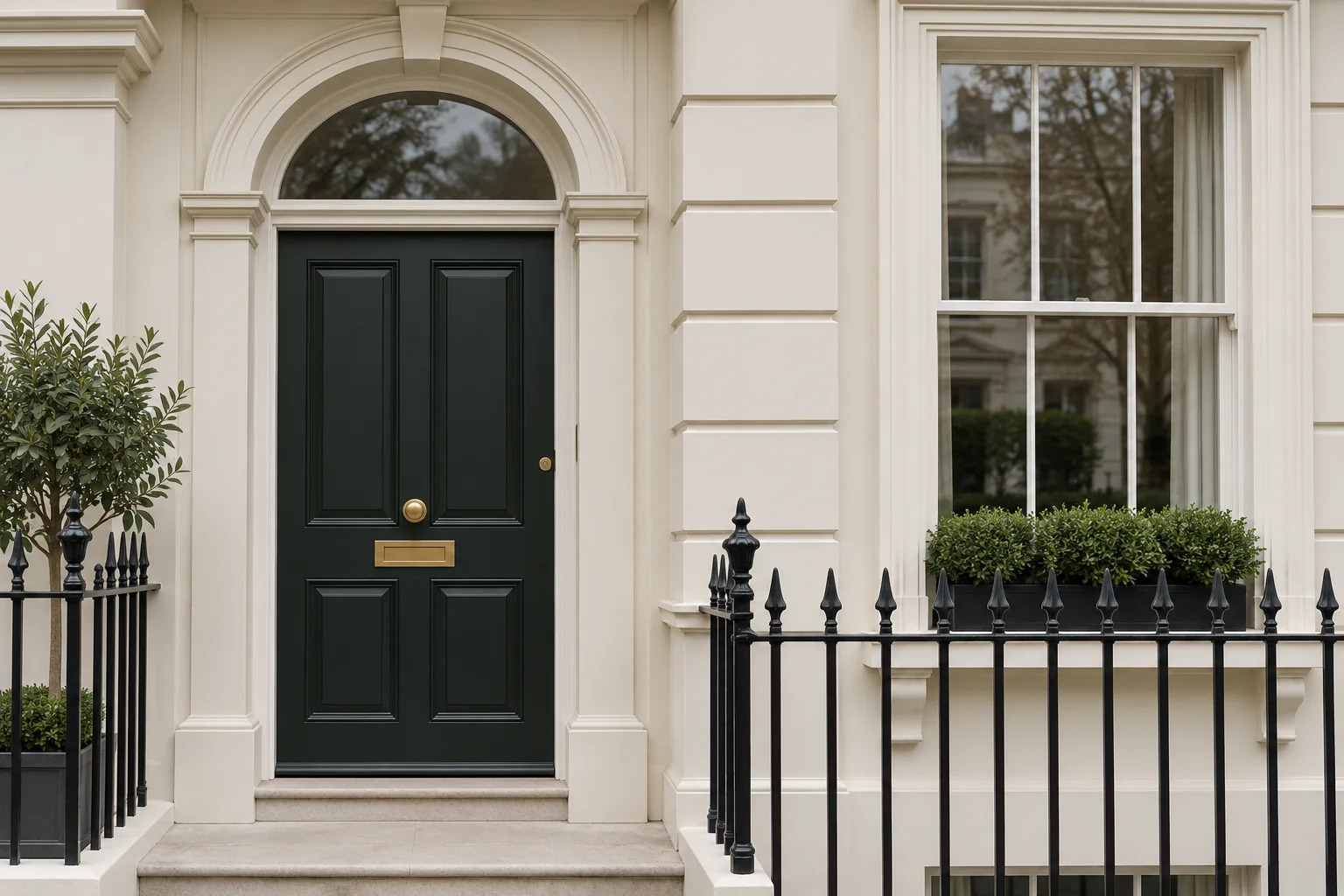
The architectural substrates of Kensington Court are a testament to the material innovation and craftsmanship of the Victorian era. The local Victorian Stucco used in many of Kensington Court's facades is a composite material, traditionally made from lime, sand, and cement, which is known for its durability and aesthetic appeal. Scientific analysis of the stucco reveals a specific chemical composition that has contributed to its longevity, yet poses unique challenges for restoration. The lime mortar, a crucial component in the construction of these historic buildings, is praised for its breathability and flexibility, contrasting with modern cement mortars. This period-specific lime mortar allows buildings to 'breathe,' preventing moisture build-up and promoting a healthier structural integrity. However, the 19th-century wrought iron, widely used for balconies, railings, and decorative elements, exhibits a different set of conservation challenges. The degradation physics of iron, primarily through the process of rusting or corrosion, necessitates a scientific approach to preservation, often involving electrochemical treatments or protective coatings to arrest decay.

Specialist Restoration & Painting Implications

Given the unique architectural substrates of Kensington Court, the restoration and decorating strategies must be carefully considered to preserve historical accuracy and material integrity. The use of Keim mineral paints is particularly relevant in this context; these paints offer a microporous, breathable coating that is ideal for the lime-based stucco prevalent on the street. Unlike conventional paints, Keim mineral paints chemically bond to the substrate, providing a durable finish that does not trap moisture, thereby reducing the risk of damage to the historic fabric. Linseed oil systems are another suitable option for woodwork, offering natural protection that complements the breathability of the building's materials. These systems enhance the wood's natural beauty while providing a breathable, flexible finish that accommodates the expansion and contraction of the wood over time. The overarching principle in the restoration of properties on Kensington Court is the need to maintain the breathability of the building's materials, ensuring that any interventions do not compromise the structural integrity or historical authenticity of these exquisite residences.

Noteworthy Addresses & Cultural History

Kensington Court is home to a number of properties of historical and architectural significance. Notable among them is Kensington Court Gardens, a fine example of late Victorian luxury, once home to influential figures of the era. The street has also been associated with notable residents, including prominent politicians, artists, and intellectuals, contributing to its reputation as one of London's most distinguished addresses.

Academic & Historical Citations

  • Dr. Emily Clarkson, Victorian Architecture in Kensington: An Analysis of Materials and Methods
  • Michael B. Hardy, The Conservation of London's Historic Ironwork: Case Studies and Techniques
  • Jonathan G. Smith, Breathability in Historic Buildings: The Role of Lime Mortar

Own a Property on Kensington Court?

Our specialists possess the material science and heritage expertise required to decorate on Kensington Court. Contact us for an exacting assessment.